
 BG
BG  BY
BY  CY
CY  CZ
CZ  DE
DE  EE
EE  ES
ES  GR
GR  HU
HU  IS
IS  IT
IT  LT
LT  LV
LV  MY
MY  PL
PL  PT
PT  RO
RO  SK
SK  TR
TR  UA
UA  USA
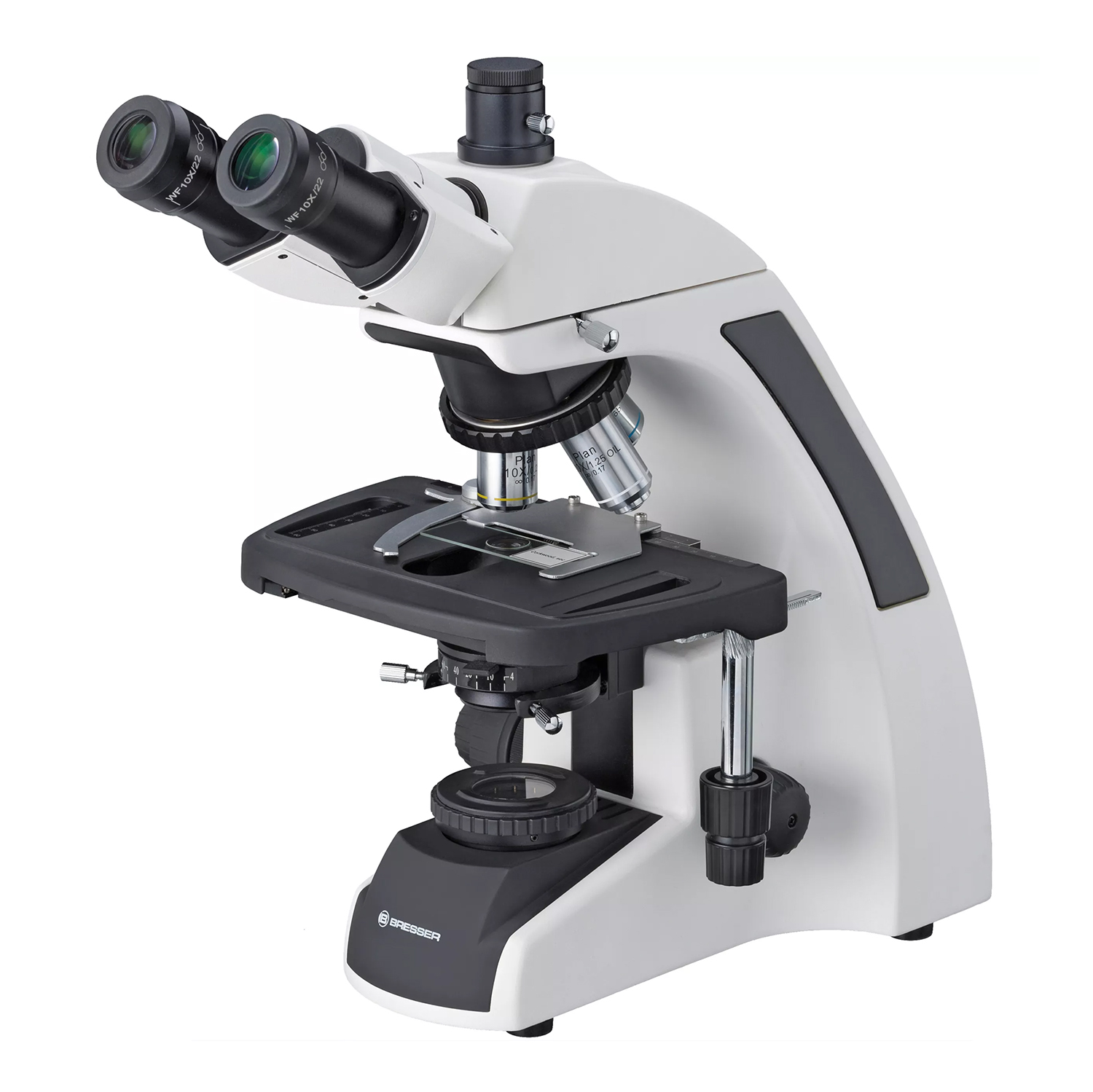
USA Bresser Science Infinity Microscope
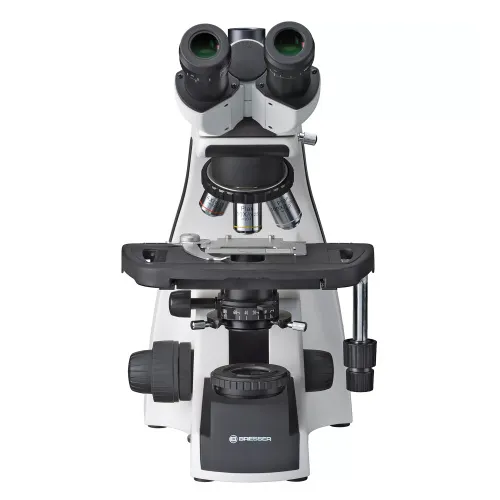
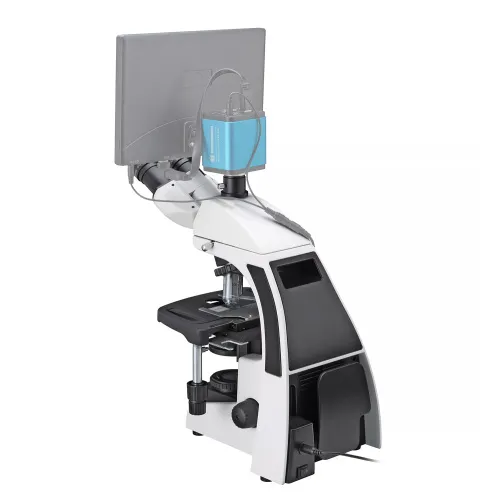
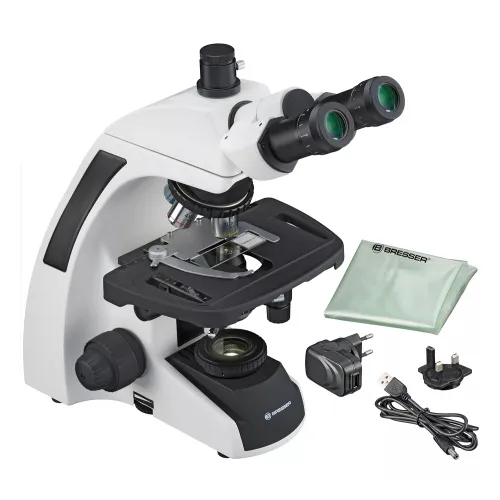
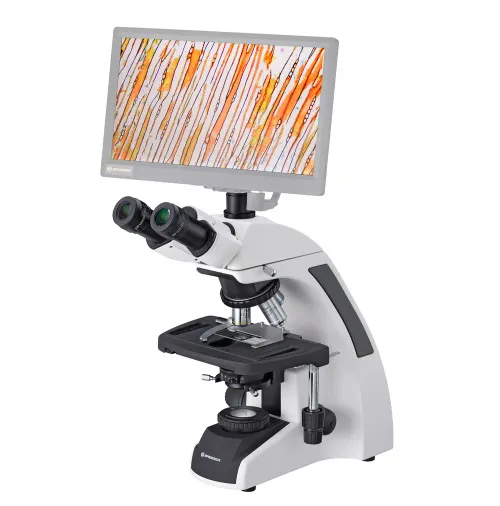
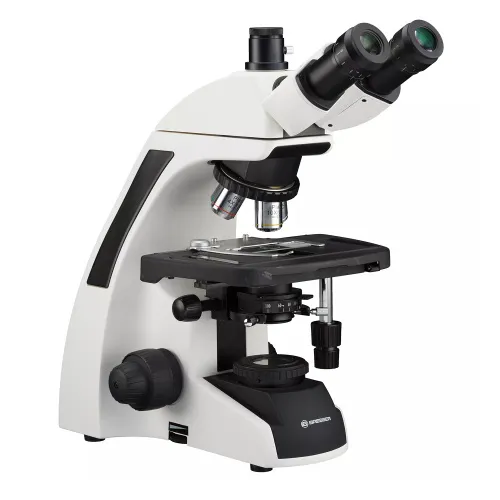
Trinocular head. Magnification: 40x–1000x
| Product ID | 72323 |
| Brand | Bresser GmbH, Germany |
| Warranty | 2 years |
| EAN | 4007922030791 |
| Package size (LxWxH) | 40x39x21 cm |
| Shipping Weight | 9 kg |
The New Bresser Science Infinity is the new top of the range of the biology microscope series by Bresser. It is based on infinitely corrected planachromatic objective lenses with superb image quality. Because of the modern design and optics the installation of accessories is very simple and one has many options. The WF 10x eyepieces offer a large visual field of 22mm and are also suitable for spectacle wearers. For protection purposes the eyepieces are rubber coated. The interpupillary distance can be adjusted from ca. 55mm to 75mm. Dioptre adjustments are possible with both eyepieces.
The bright and durable LED illumination is dimmable and also very practical for darkfield microscopy.
The Full Köhler illumination is adjustable with the built-in luminous-field diaphragm and the vertically and horizontally adjustable Abbe condenser (numerical aperture 1.25, with iris diaphragm). An imprint of the different possible magnifications on the condenser makes the adjustment of the iris diaphragm very fast and precise.
Coaxial pinions drive the stage and focus which enables ergonomic operation of the microscope.
The trinocular tube enables the direct attachment of a c-mount camera or MikroCam.
The kit includes:
- Microscope with integrated LED illumination
- Planachromatic objectives, infinity corrected (4x, 10x, 40x, 100x oil)
- 2x eyepieces (WF 10x)
- Mains adapter
- Manual
- Immersion oil
- Dust cover
| Product ID | 72323 |
| Brand | Bresser GmbH, Germany |
| Warranty | 2 years |
| EAN | 4007922030791 |
| Package size (LxWxH) | 40x39x21 cm |
| Shipping Weight | 9 kg |
| Type | biological, light/optical |
| Microscope head type | trinocular |
| Magnification, x | 40 — 1000 |
| Objectives | 4x, 10x, 40x, 100x (planachromat) |
| Interpupillary distance, mm | 55 — 75 |
| Barrel diameter, mm | 30 |
| Stage features | mechanical |
| Eyepiece diopter adjustment | ✓ |
| Condenser | Abbe N.A. 1.25 |
| Diaphragm | iris |
| Focus | coarse and fine |
| Illumination | LED |
| Brightness adjustment | ✓ |
| Application | laboratory/medical |
| Illumination location | lower |
| Research method | bright field |
| Pouch/case/bag in set | dust cover |
We have gathered answers to the most frequently asked questions to help you sort things out
Find out why studying eyes under a microscope is entertaining; how insects’ and arachnids’ eyes differ and what the best way is to observe such an interesting specimen
Read this review to learn how to observe human hair, what different hair looks like under a microscope and what magnification is required for observations
Learn what a numerical aperture is and how to choose a suitable objective lens for your microscope here
Learn what a spider looks like under microscope, when the best time is to take photos of it, how to study it properly at magnification and more interesting facts about observing insects and arachnids
This review for beginner explorers of the micro world introduces you to the optical, illuminating and mechanical parts of a microscope and their functions
Short article about Paramecium caudatum - a microorganism that is interesting to observe through any microscope