

 BG
BG  BY
BY  CY
CY  CZ
CZ  DE
DE  EE
EE  ES
ES  GR
GR  HU
HU  IS
IS  IT
IT  LT
LT  LV
LV  MY
MY  PL
PL  PT
PT  RO
RO  SK
SK  TR
TR  UA
UA  USA
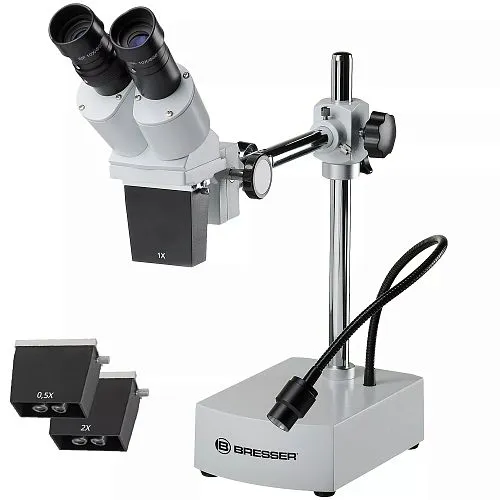
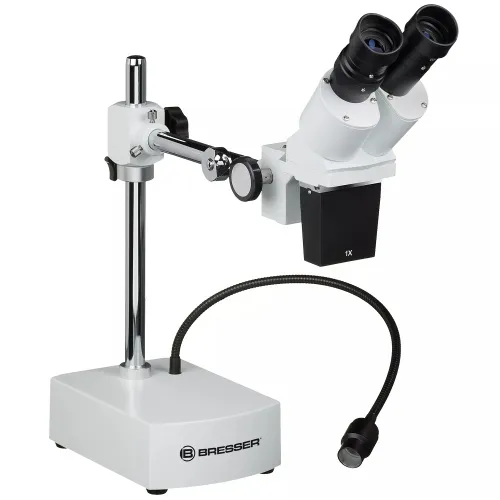
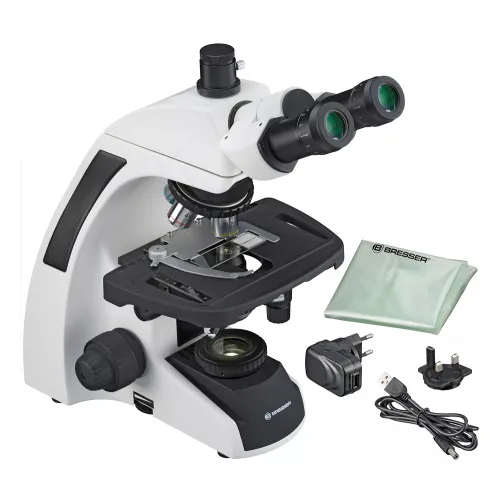
USA Bresser Biorit ICD CS 5–20x LED Stereo Microscope
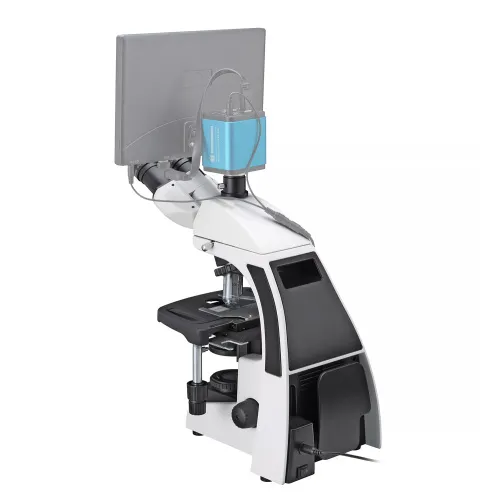
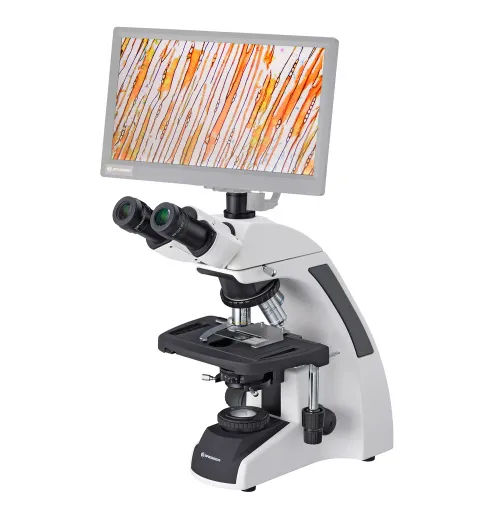
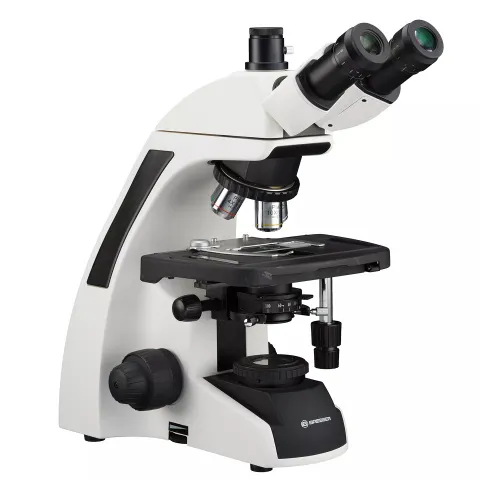
The price is valid only for the online store and may differ from the prices in retail stores.
Magnification: 5–20х. Working distance: 230mm
Binocular
The microscope head is a core element of the microscope that you look through to see a magnified sample
5 — 20
How much the size of a sample increases when you observe it through a microscope
For applied research
Application and use of the microscope
| Product ID | 75732 |
| Brand | Bresser GmbH, Germany |
| Warranty | 2 years |
| EAN | 4007922061016 |
| Package size (LxWxH) | 41x20x43 cm |
| Shipping Weight | 6.8 kg |
Description
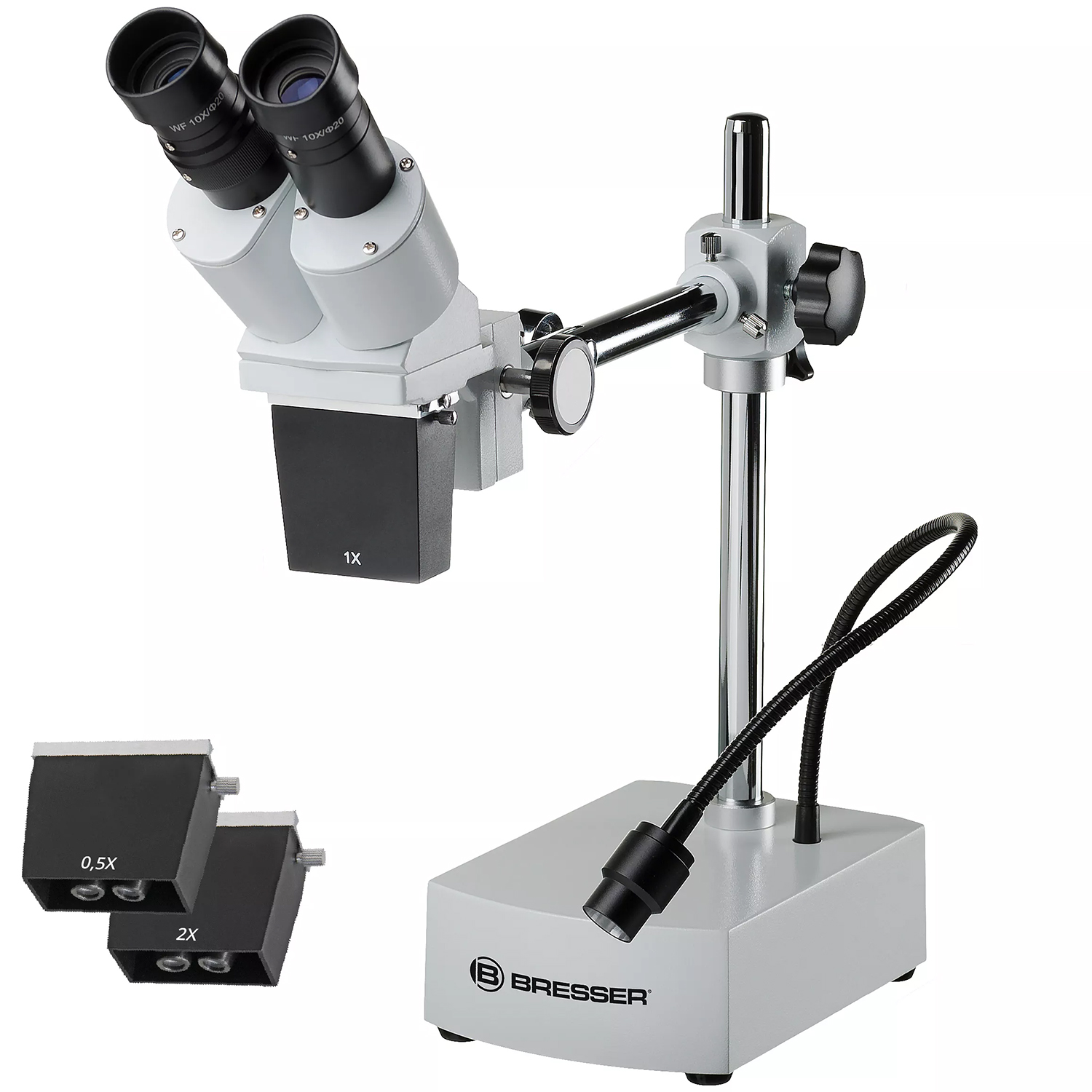
Because of its large swing range and very large working distance the Bresser Biorit ICD CS offers an excellent basis for various observations . It is the perfect choice for fine handiwork, e.g. soldering of SMD components, quality control of parts, electronics etc.
Key features:
- Stereo microscope with large swing range and high working distance
- LED illumination/AC Power
- Working distance with 1.0x objective (approx.): 230 mm/swing arm: 210 mm
- Object height: 70 mm
The kit includes:
- Stereomicroscope
- Dust cover
- 1 pair of rubber eye cups
- Additional objective 0.5x/1.0x/2.0x
- Power cable
Specifications
| Product ID | 75732 |
| Brand | Bresser GmbH, Germany |
| Warranty | 2 years |
| EAN | 4007922061016 |
| Package size (LxWxH) | 41x20x43 cm |
| Shipping Weight | 6.8 kg |
| Type | light/optical, stereo/instrumental |
| Microscope head type | binocular |
| Magnification, x | 5 — 20 |
| Eyepiece tube diameter, mm | 30.5 |
| Eyepieces | WF10x (2 pcs.) |
| Objectives | 0,5x, 1x, 2x |
| Working distance, mm | 230 |
| Illumination | LED |
| Brightness adjustment | ✓ |
| User level | beginners |
| Assembly and installation difficulty level | easy |
| Application | for applied research |
| Illumination location | upper |
| Research method | bright field |
Reviews
Frequently Asked Questions – Microscopes (20.04.2020)
We have gathered answers to the most frequently asked questions to help you sort things out
We have gathered answers to the most frequently asked questions to help you sort things out
Eye under a microscope: insects’ photo (20.04.2020)
Find out why studying eyes under a microscope is entertaining; how insects’ and arachnids’ eyes differ and what the best way is to observe such an interesting specimen
Find out why studying eyes under a microscope is entertaining; how insects’ and arachnids’ eyes differ and what the best way is to observe such an interesting specimen
What does hair look like under a microscope? (17.05.2020)
Read this review to learn how to observe human hair, what different hair looks like under a microscope and what magnification is required for observations
Read this review to learn how to observe human hair, what different hair looks like under a microscope and what magnification is required for observations
How does the aperture of a microscope objective lens work? (17.05.2020)
Learn what a numerical aperture is and how to choose a suitable objective lens for your microscope here
Learn what a numerical aperture is and how to choose a suitable objective lens for your microscope here
A spider under a microscope: photos and peculiarities of studying the slide (18.05.2020)
Learn what a spider looks like under microscope, when the best time is to take photos of it, how to study it properly at magnification and more interesting facts about observing insects and arachnids
Learn what a spider looks like under microscope, when the best time is to take photos of it, how to study it properly at magnification and more interesting facts about observing insects and arachnids
What does a microscope consist of? (18.05.2020)
This review for beginner explorers of the micro world introduces you to the optical, illuminating and mechanical parts of a microscope and their functions
This review for beginner explorers of the micro world introduces you to the optical, illuminating and mechanical parts of a microscope and their functions
Paramecium caudatum - your first friend from the microworld (21.11.2016)
Short article about Paramecium caudatum - a microorganism that is interesting to observe through any microscope
Questions and Answers
Submit your question/feedback

Bresser Biorit ICD CS 5–20x LED Stereo Microscope
Microscopes
Bresser GmbH, Germany
6.8 kg
43 cm
20
41
https://eu.levenhuk.com/catalogue/microscopes/bresser-biorit-icd-cs-5-20x-led-stereo-microscope/
75732
Base color