
 BG
BG  BY
BY  CY
CY  CZ
CZ  DE
DE  EE
EE  ES
ES  GR
GR  HU
HU  IS
IS  IT
IT  LT
LT  LV
LV  MY
MY  PL
PL  PT
PT  RO
RO  SK
SK  TR
TR  UA
UA  USA
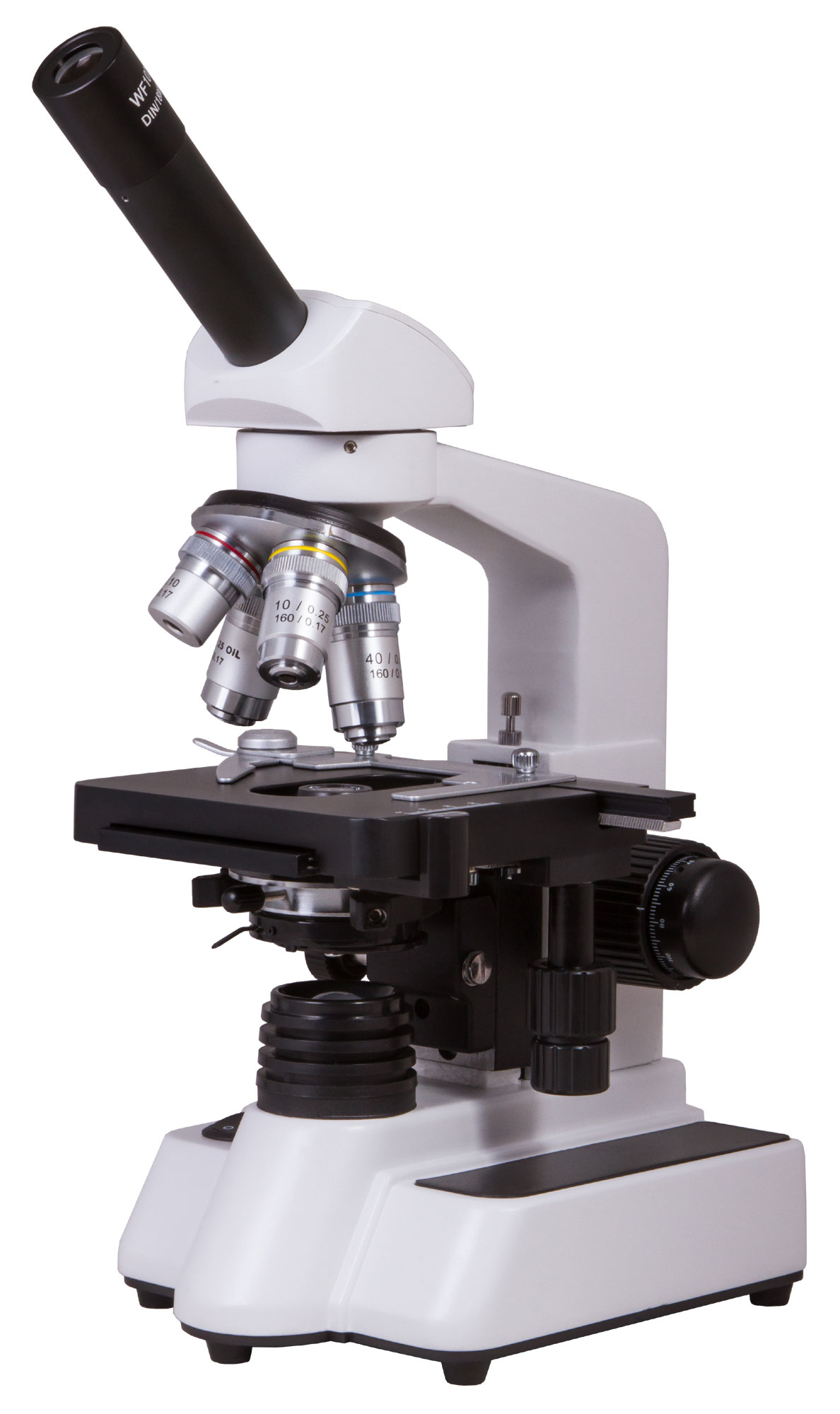
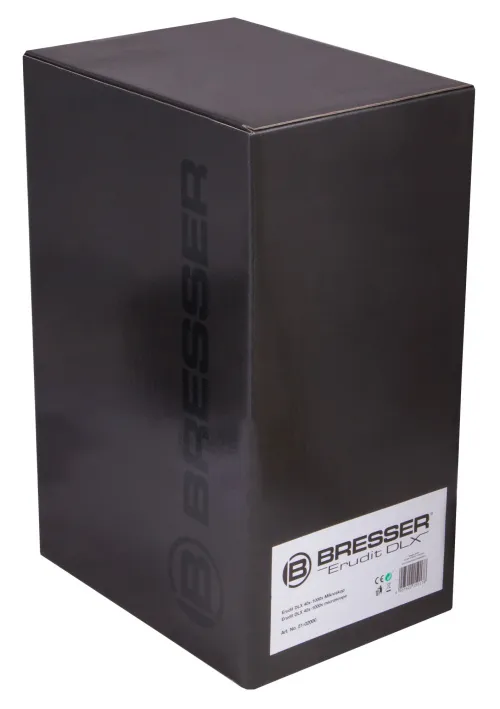
USA Bresser Erudit DLX 40–1000x Microscope - Exhibition Item
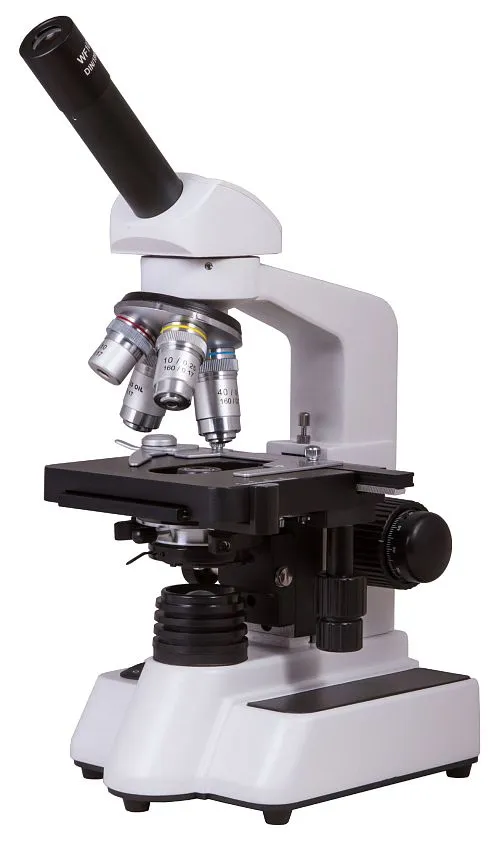
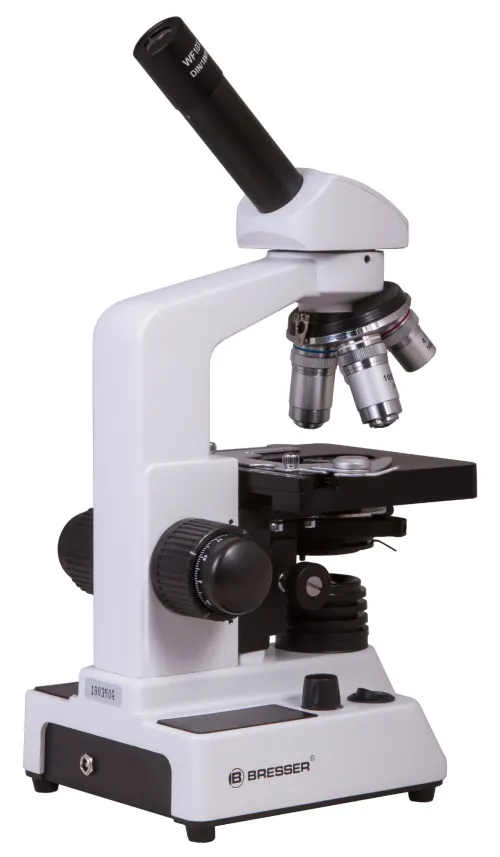
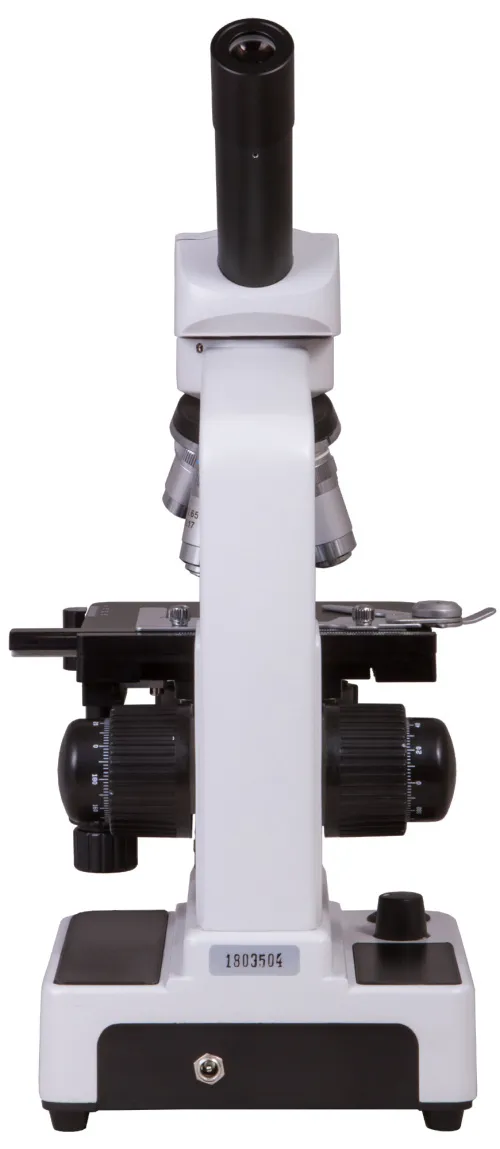
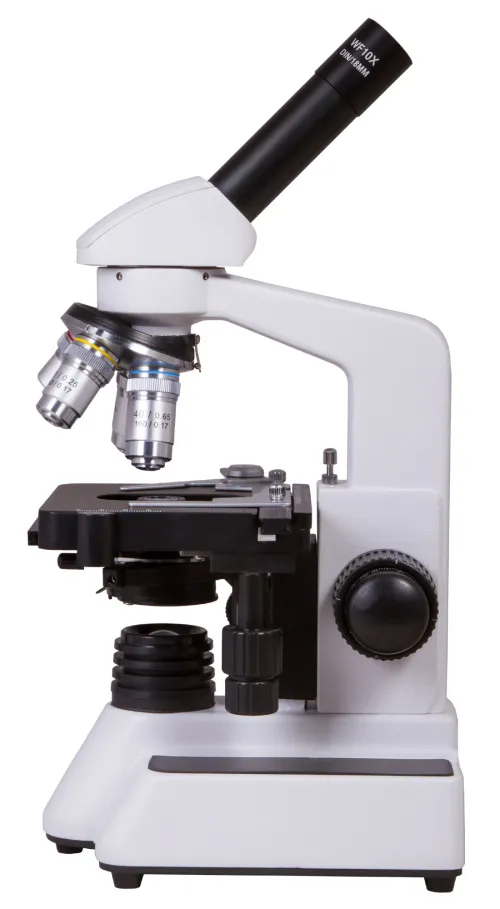
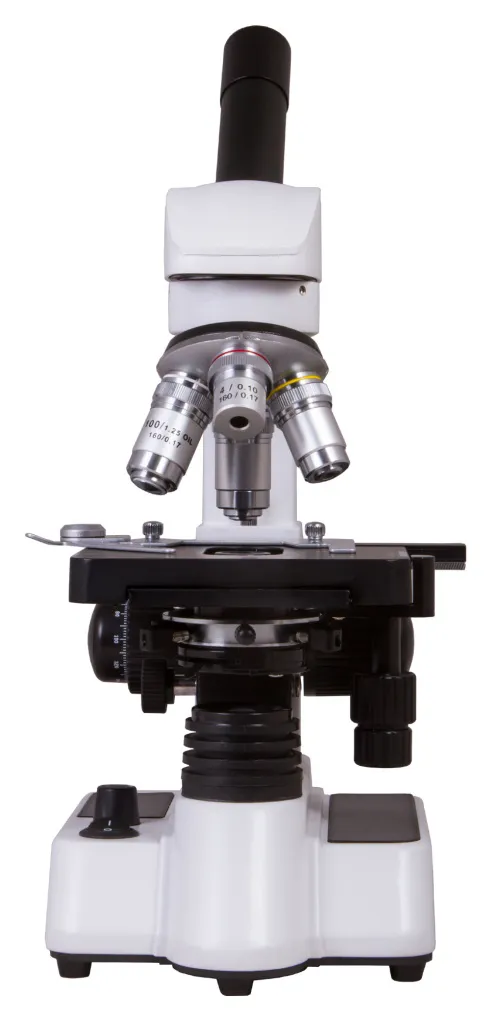

For brightfield observations. Magnification: 40–1000x. Monocular
| Product ID | 87219 |
| Brand | Bresser GmbH, Germany |
| Warranty | 2 years |
| EAN | 2400000066880 |
| Package size (LxWxH) | 46x30x22 cm |
| Shipping Weight | 3.73 kg |
Special price! Further discounts or special offers cannot be applied in this case.
Exhibition copy.
The packaging is damaged.
Otherwise, the product is fully functional.
Exhibition copies cannot be exchanged or returned for a refund.
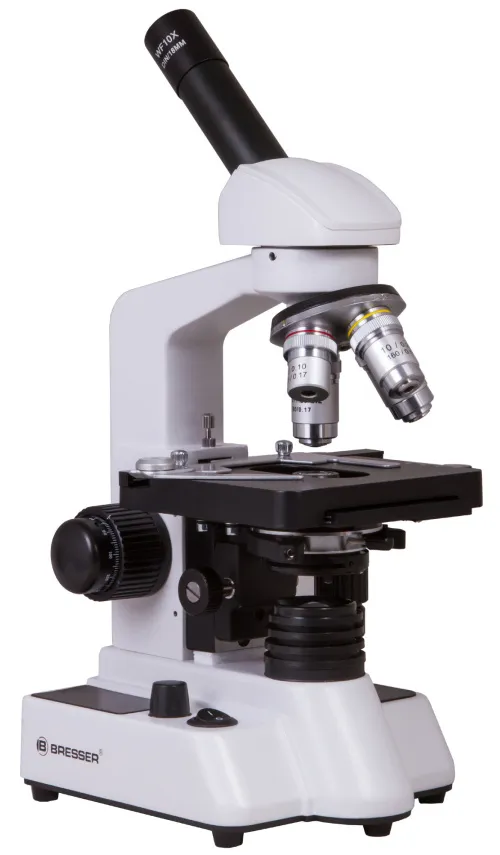
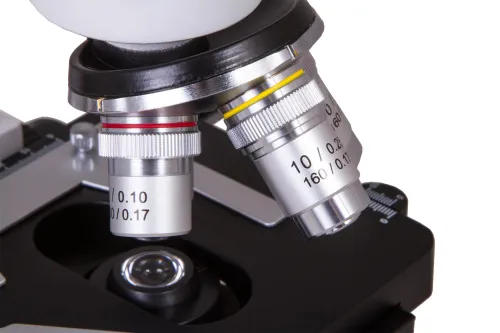
The Bresser Erudit DLX is a high-quality microscope for school, studies and hobby use. An integrated rechargeable battery makes the Erudit DLX for mobile use. The LED illuminator and the height adjustable condenser (with diaphragm and filter holder) offer an optimal illumination. The achromatic DIN objectives allow a very good image. The 40x and 100x objectives are resilient to save the preparation for damage. The microscope has a 360° rotatable monocular view, coarse and fine focusing drive, and a coaxial mechanical desk with nonius.
Features:
- Type: biological microscope
- View: monocular
- Comfortable view, 360° turnable head
- Application range: biology, botany, education, teaching
- Illumination: LED, adjustable condenser
- Level: beginner, intermediate
- Extras: rechargeable battery operation
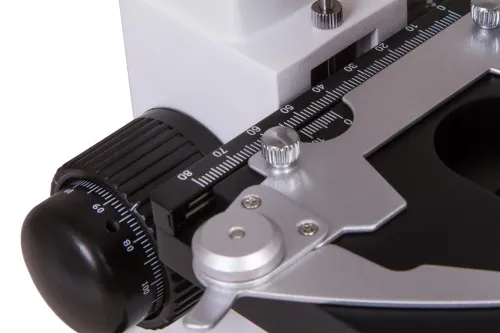
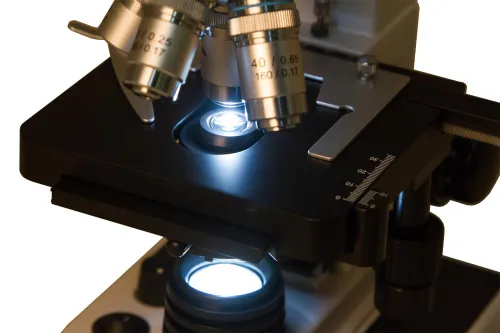
- Coaxial mechanical stage
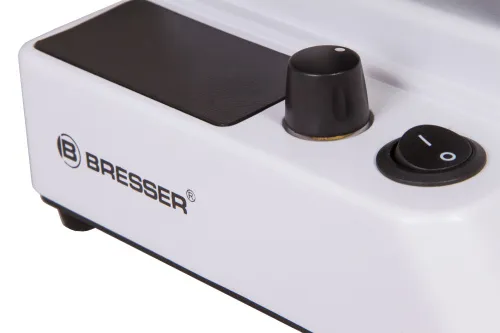
- Integrated dimmer
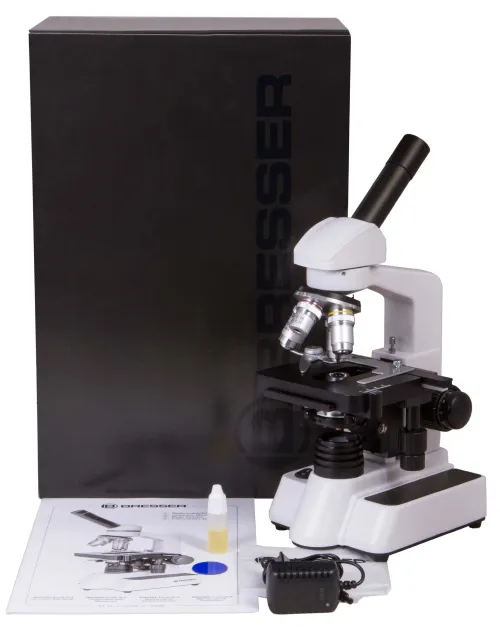
The kit includes:
- Microscope body
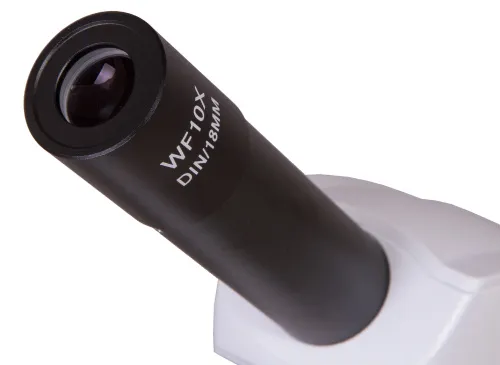
- Eyepiece 10x
- 4 objecitves: 4x, 10x, 40x, 100x (oil)
- Abbe condenser with field diaphragm and filter holder
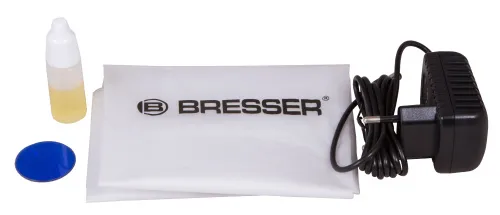
- Blue filter
- Immersion oil
- Dust cover
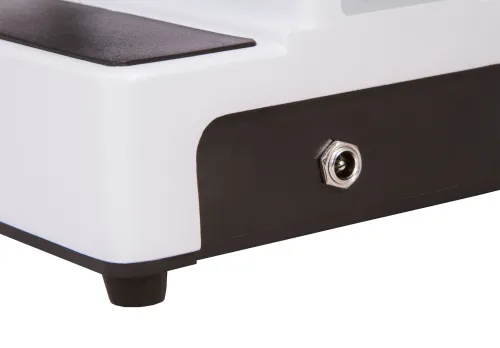
- Power supply
- User manual
| Product ID | 87219 |
| Brand | Bresser GmbH, Germany |
| Warranty | 2 years |
| EAN | 2400000066880 |
| Package size (LxWxH) | 46x30x22 cm |
| Shipping Weight | 3.73 kg |
| Microscope specifications | |
| Type | biological, light/optical |
| Microscope head type | monocular |
| Head | 360 ° rotatable |
| Magnification, x | 40 — 1000 |
| Eyepiece tube diameter, mm | 23 |
| Eyepieces | 10x with a pointer |
| Objectives | achromat DIN standard: 4x, 10x, 40x, 100x (oil) |
| Revolving nosepiece | for 4 objectives |
| Stage features | mechanical, two-coordinate, with a Vernier scale and mechanical stage |
| Condenser | Abbe N.A. 1.25, height adjustment, filter holder |
| Diaphragm | field |
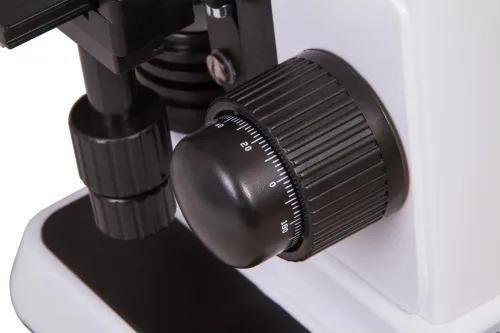
| Focus | coaxial; coarse and fine |
| Body | aluminum, plastic |
| Illumination | LED |
| Brightness adjustment | ✓ |
| Power supply | 230V AC adapter (included), built-in battery |
| Light filters | blue |
| User level | beginners |
| Application | school/educational |
| Illumination location | lower |
| Research method | bright field |
| Pouch/case/bag in set | dust cover |
We have gathered answers to the most frequently asked questions to help you sort things out
Find out why studying eyes under a microscope is entertaining; how insects’ and arachnids’ eyes differ and what the best way is to observe such an interesting specimen
Read this review to learn how to observe human hair, what different hair looks like under a microscope and what magnification is required for observations
Learn what a numerical aperture is and how to choose a suitable objective lens for your microscope here
Learn what a spider looks like under microscope, when the best time is to take photos of it, how to study it properly at magnification and more interesting facts about observing insects and arachnids
This review for beginner explorers of the micro world introduces you to the optical, illuminating and mechanical parts of a microscope and their functions
Short article about Paramecium caudatum - a microorganism that is interesting to observe through any microscope