
 BG
BG  BY
BY  CY
CY  CZ
CZ  DE
DE  EE
EE  ES
ES  GR
GR  HU
HU  IS
IS  IT
IT  LT
LT  LV
LV  MY
MY  PL
PL  PT
PT  RO
RO  SK
SK  TR
TR  UA
UA  USA
USA Levenhuk New Skyline PLUS 130/900 EQ2 Telescope
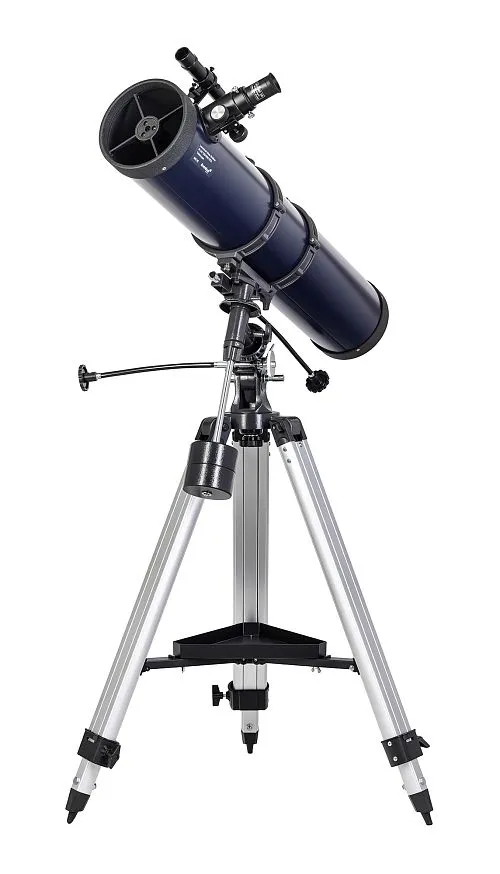
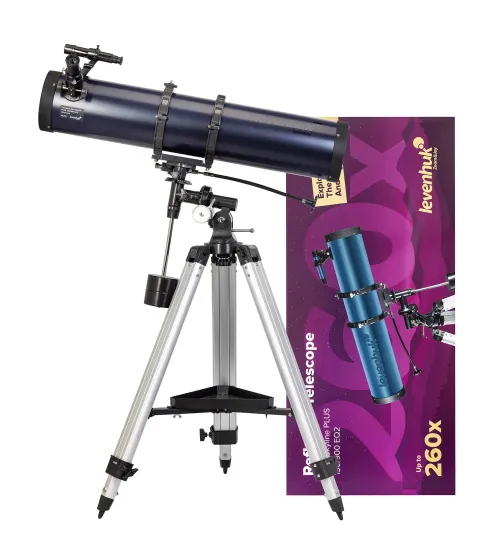
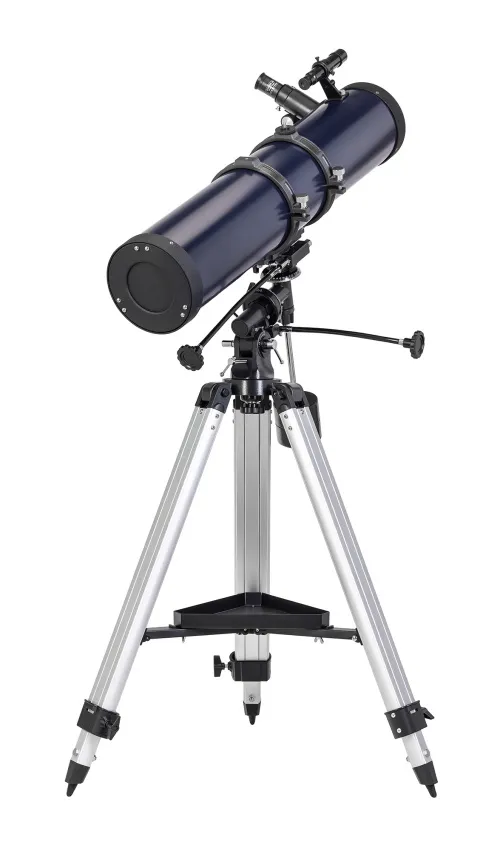
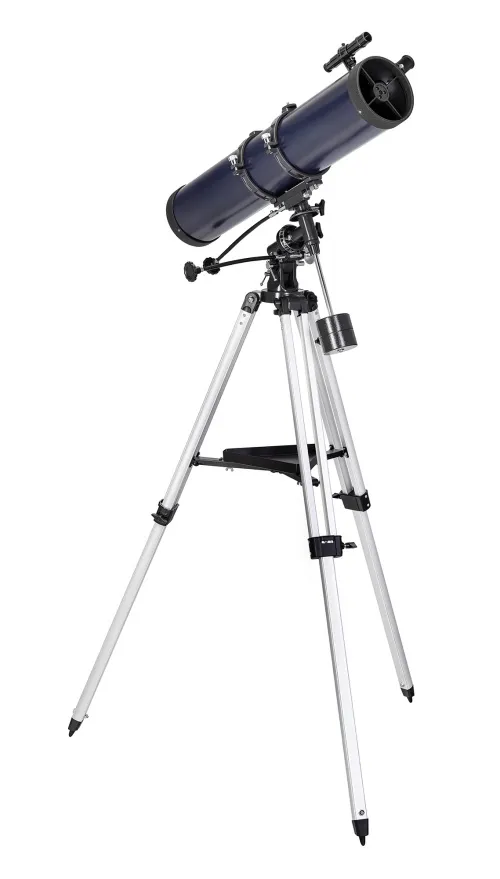
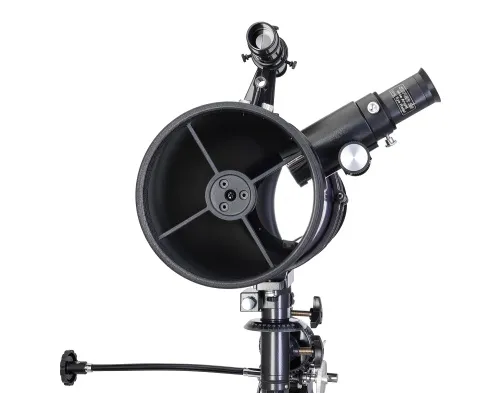
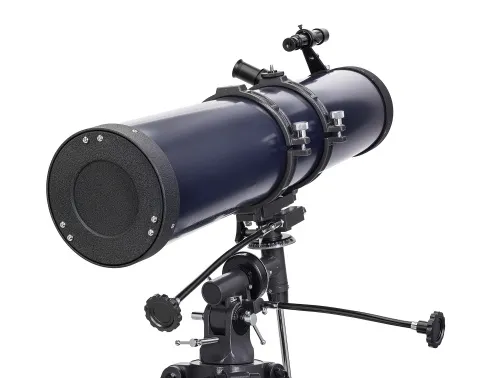
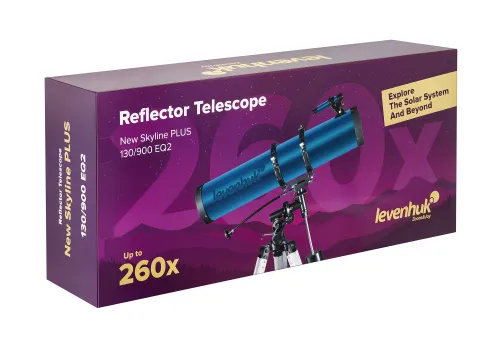
Fast and reliable Newtonian reflector with straightforward controls. Your ticket to the deep sky
| Product ID | 86215 |
| Brand | Levenhuk, Inc., USA |
| Warranty | 50 years |
| EAN | 5905555027081 |
| Package size (LxWxH) | 110x50x26 cm |
| Shipping Weight | 14.85 kg |
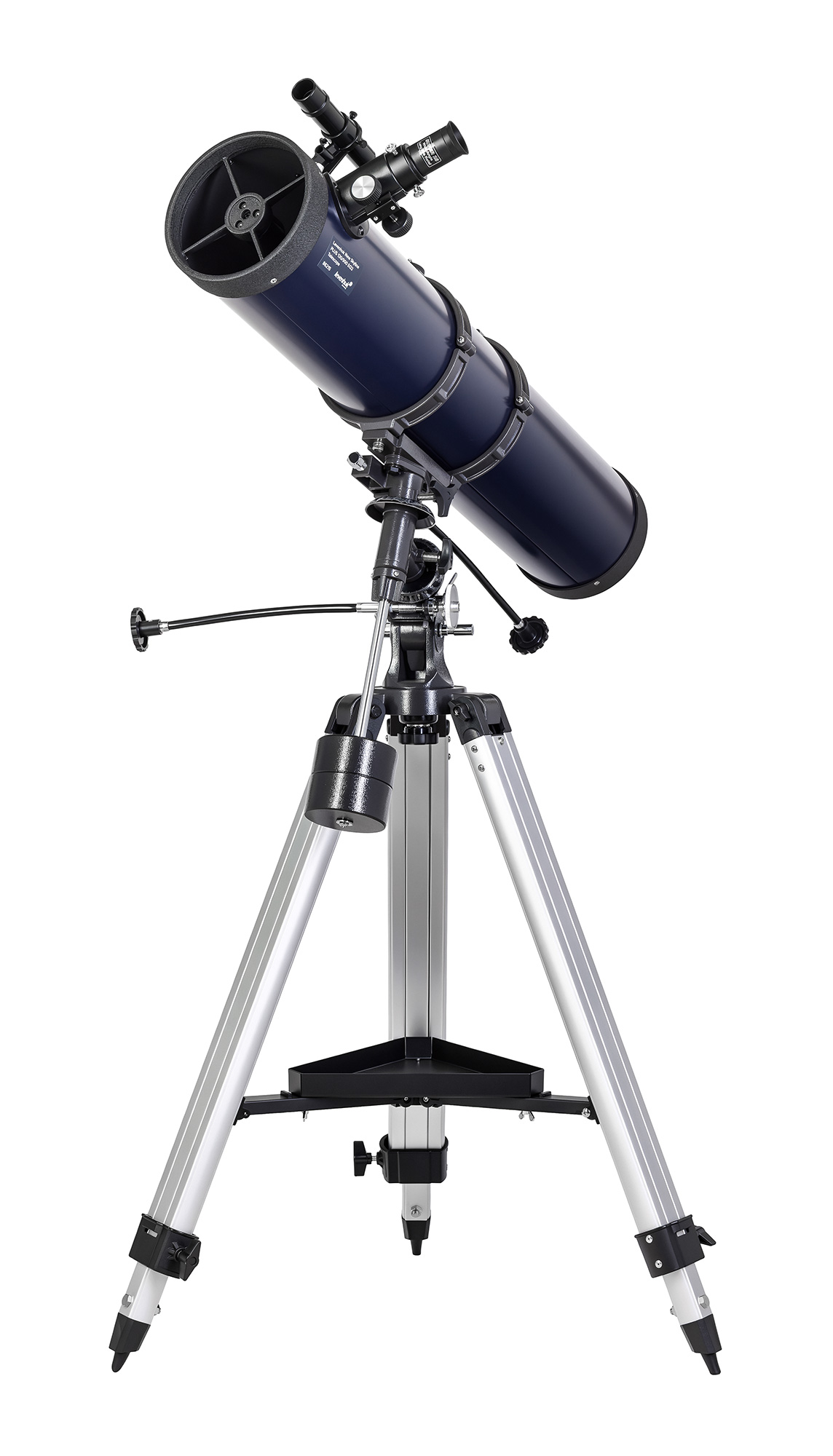
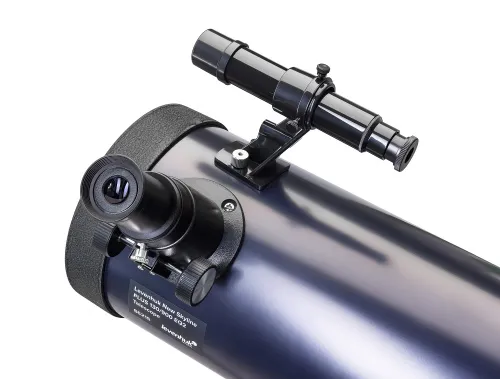
Meet the Levenhuk New Skyline PLUS 130/900 EQ2. This Newtonian reflector telescope serves as an excellent guide to astronomy for beginners and seasoned stargazers alike. The heart of the system is a 130mm spherical primary mirror. Thanks to its high-quality, fully multi-coated optical glass and a 900mm focal length, the telescope delivers bright, clean, and high-contrast images. The reinforced EQ2 mount guarantees image stability and smooth tracking of astronomical targets, even at high magnifications.
What you can observe
With this telescope, you can examine lunar craters, rilles, and mountain ranges in fine detail. You will see the phases of Venus, the Martian polar caps, glimpses of the Cassini Division under excellent conditions, and Jupiter’s famous cloud bands along with its largest moons. However, the true purpose of this telescope lies in exploring deep-sky objects. Its fast optics allow you to look far beyond our solar system and see dozens of globular and open star clusters, the Orion Nebula, the Andromeda Galaxy, and thousands of other fascinating targets with your own eyes.
Ready to use out of the box
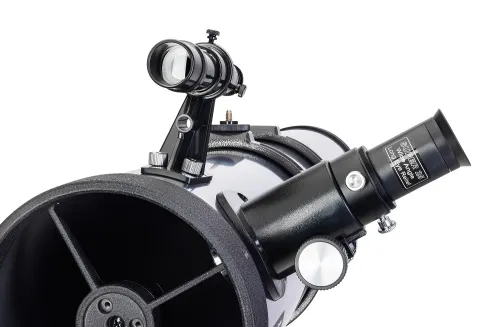
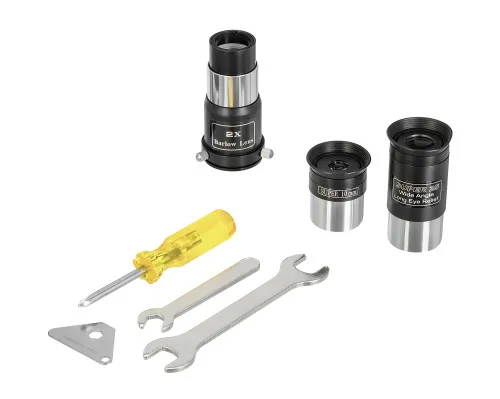
The telescope comes with a great set of accessories so you can start exploring on the very first clear night. The kit includes an optical finderscope for quick aiming, two eyepieces with 10mm and 25mm focal lengths, and a 2x Barlow lens. The reliable rack-and-pinion focuser features a standard 1.25-inch barrel size, allowing you to easily expand your accessory collection with any compatible eyepieces in the future.
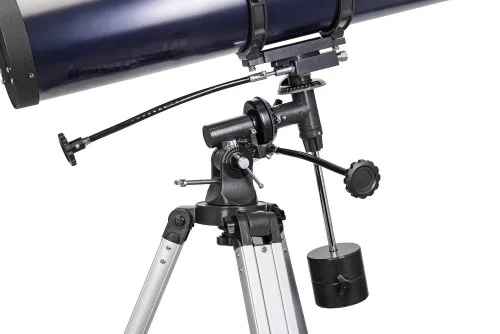
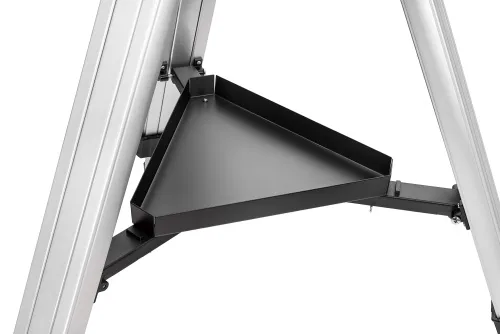
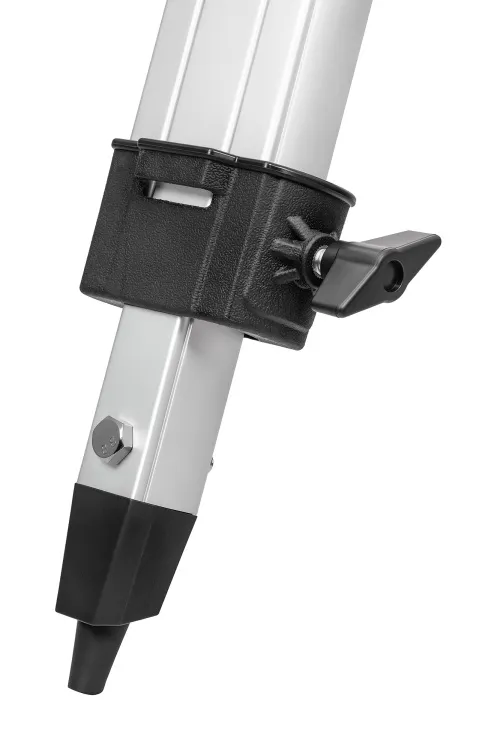
The telescope comes equipped with a manual EQ2 equatorial mount. This type of mount is specifically designed for astronomy. The slow-motion controls on both axes allow you to track celestial bodies smoothly and precisely, easily compensating for the Earth’s rotation. The aluminum tripod is fully adjustable in height to suit any observer, and an accessory tray provides a convenient spot to put all of your observing gear.
Who this telescope is for
The Levenhuk New Skyline PLUS 130/900 EQ2 is perfect for curious beginners ready to look beyond the Moon and planets. It is also an affordable yet serious tool for experienced observers hunting for galaxies, nebulae, and star clusters.
Key features:
- An aperture made for deep space. The 130mm mirror gathers enough light to reveal thousands of nebulae, galaxies, and star clusters
- Highly versatile observations. It works exceptionally well for both solar system and deep-space targets, opening up the full picture of the universe
- Complete starter kit – everything you need for your first night of astronomy is in the box with no extra purchases required
- The convenient sturdy EQ2 mount provides essential stability and allows you to track moving celestial objects smoothly and precisely
- Upgrade potential – you can easily use additional filters and eyepieces to expand the telescope’s optical capabilities over time
- An excellent choice for getting your first taste of astronomy and diving deeper into the hobby
The kit includes:
- Telescope optical tube
- SUPER eyepiece 10mm, 1.25"
- SUPER eyepiece 25mm, 1.25"
- 2x Barlow lens, 1.25”
- 6x24 optical finderscope
- Equatorial mount EQ2
- Slow-motion controls
- Counterweight
- Counterweight bar
- Aluminum tripod
- Accessory tray
- User manual and warranty slip
| Product ID | 86215 |
| Brand | Levenhuk, Inc., USA |
| Warranty | 50 years |
| EAN | 5905555027081 |
| Package size (LxWxH) | 110x50x26 cm |
| Shipping Weight | 14.85 kg |
| Optical design | reflector |
| Optical scheme | Newtonian |
| Optics material | optical glass |
| Optics coating | fully multi-coated |
| Objective lens diameter (aperture), mm | 130 |
| Lens (mirror) shape | spherical |
| Focal length, mm | 900 |
| Highest practical power, x | 260 |
| Aperture ratio | f/6.92 |
| Limiting stellar magnitude | 13.3 |
| Eyepieces | SUPER 10mm (90x), SUPER 25mm (36x) |
| Eyepiece barrel diameter, in | 1.25 |
| Barlow lens | 2x |
| Finderscope | optical, 6x24 |
| Focuser | 1.25", rack & pinion |
| Tripod | aluminum |
| Tripod height (adjustable), mm | 700–1310 |
| Accessory tray | ✓ |
| Telescope control | manual |
| Mount | equatorial, EQ2 |
| Slow-motion controls | along both axes |
| Additional | standard T-thread (M42) for mounting a SLR camera |
| Optical tube material | aluminum |
| Optical tube dimensions, mm | 170x170x840 |
| Optical tube weight, kg | 13 |
| User level | beginners, experienced users |
| Observed object | deep-sky objects |
| Extended kit | ✓ |
Convenient diagrams that describe how to install additional accessories on refractors and catadioptric telescopes
Find out how to assemble a telescope on an example of the Levenhuk Skyline 90x900 EQ telescope
This short guide will help you avoid typical mistakes and learn more about telescope and mounting types
The basics of astronomical observations for beginners
In this article we have gathered answers to some of the most frequently asked questions about telescopes
The most interesting celestial objects you can observe with Levenhuk telescopes
How telescopes work?
You can actually perform observations from your balcony!
All about telescope sizes, types, magnification, and mounts
Learn how to set up and use the telescope properly
Astronomy in light-polluted skies. Find out what you can observe in the city
Read an interesting comprehensive article on telescopes for little astronomers
The pictures are made with Levenhuk telescopes
Celestial objects you can observe with telescopes of different apertures
Colored and vivid images of galaxies, planets and star clusters entrance everyone who is fascinated by boundless space
Find an interesting review on the history of the changes to a refracting telescope
To make the process of choosing a telescope easier, we will tell you about the characteristics of the most popular types of telescopes today
Learn everything you need to know about refractor telescopes to make the right choice