
 BG
BG  BY
BY  CY
CY  CZ
CZ  DE
DE  EE
EE  ES
ES  GR
GR  HU
HU  IS
IS  IT
IT  LT
LT  LV
LV  MY
MY  PL
PL  PT
PT  RO
RO  SK
SK  TR
TR  UA
UA  USA
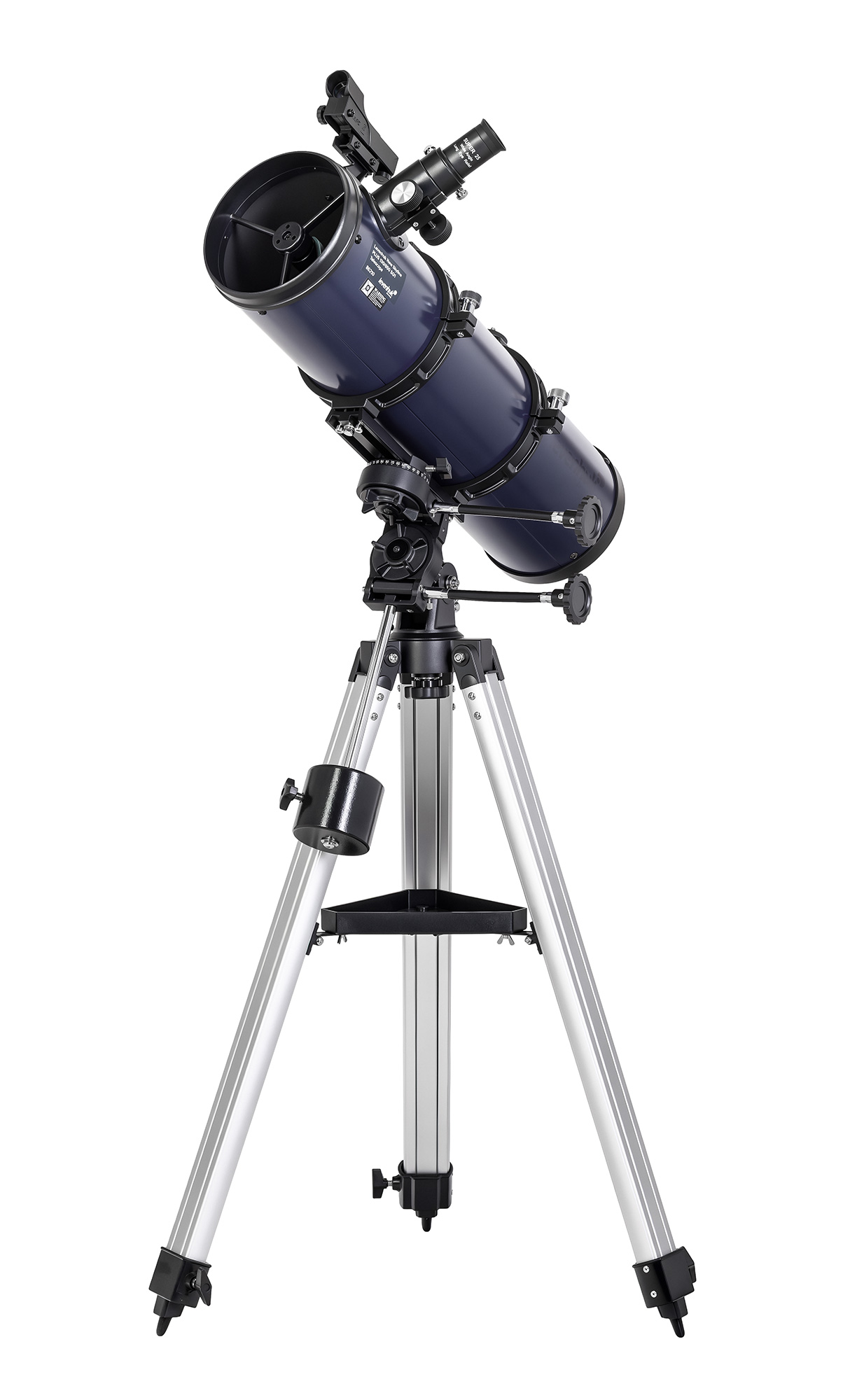
USA Levenhuk New Skyline PLUS 130/650 SQ1 Telescope
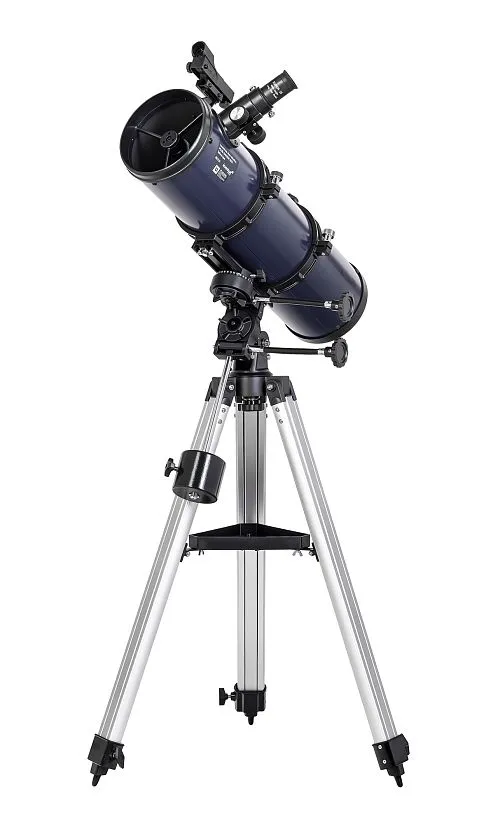
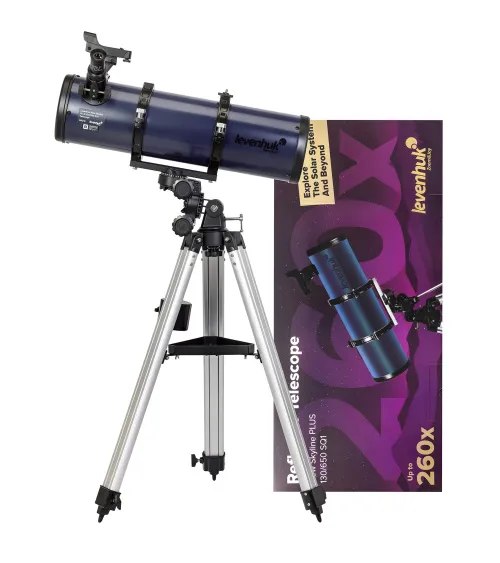
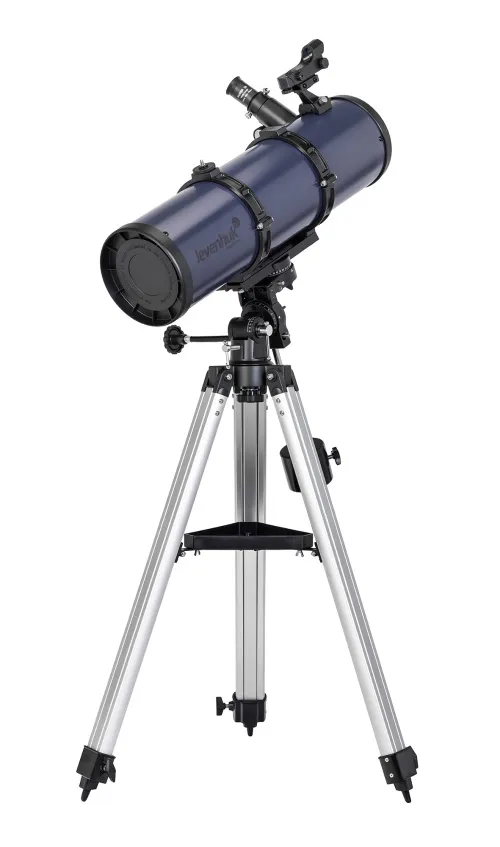
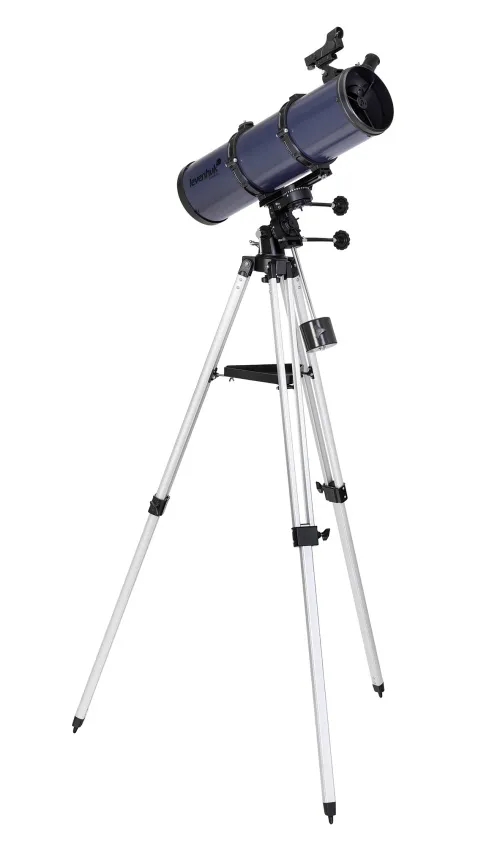
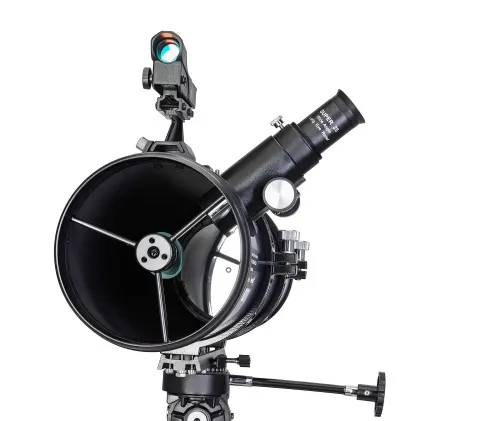
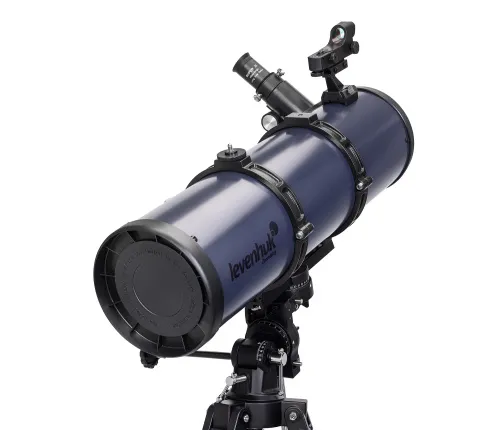
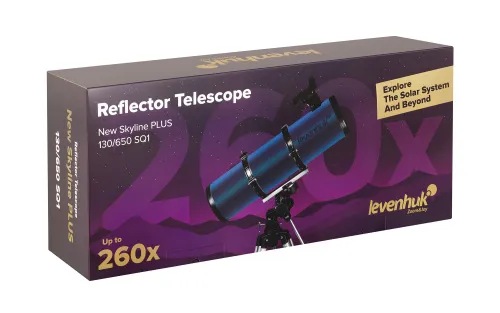
Compact Newtonian reflector for astronomers who dream of finding nebulae, galaxies, and star clusters in the sky
| Product ID | 86210 |
| Brand | Levenhuk, Inc., USA |
| Warranty | 50 years |
| EAN | 5905555027036 |
| Package size (LxWxH) | 94x44x24 cm |
| Shipping Weight | 10.05 kg |
The Levenhuk New Skyline PLUS 130/650 SQ1 is the choice for ambitious astronomers who are drawn to the beauty of deep space. This telescope can reveal many galaxies and nebulae. They will appear in the eyepiece as hazy clouds or elongated smudges, exactly as thousands of observers around the world see them. A living Universe will unfold before your eyes, where every object has its own character, shape, and history.
Optical capabilities
The telescope is perfect for hunting nebulae (Orion, Ring, Dumbbell), galaxies (Andromeda and its companions M32 and M110), globular clusters (M13 in Hercules), and open clusters (Pleiades, Beehive). The level of detail changes depending on the eyepiece you use. With the included 25mm eyepiece, the Orion Nebula looks like a greenish cloud shaped like a butterfly’s wings, revealing structural gas swirls inside. The 10mm eyepiece turns the Pleiades into a brilliant scatter of bluish stars against a black background.
Although the Levenhuk New Skyline PLUS 130/650 SQ1 is tuned for deep space, you can also use it to explore the Solar System. On the Moon’s surface, you will see craters, mountains, and rilles. On Jupiter’s disk you will spot two main cloud belts and the Great Red Spot, while Saturn’s rings clearly separate from the planet, with the Cassini Division becoming visible on steady nights.
Design advantages
The telescope is built as a Newtonian reflector and has a parabolic primary mirror. This gives you a clear and sharp image across the entire field of view. As with any Newtonian, the mirrors may require occasional collimation to keep them perfectly aligned — especially after transport. The process is simple and takes just a few minutes once you’ve learned it.
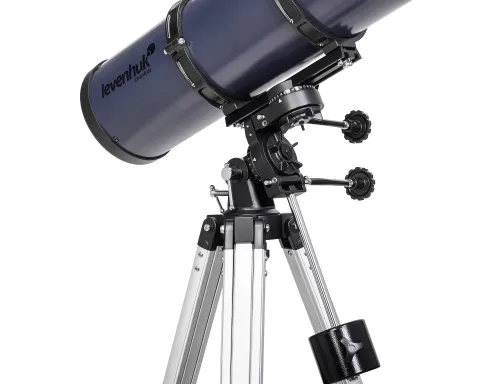
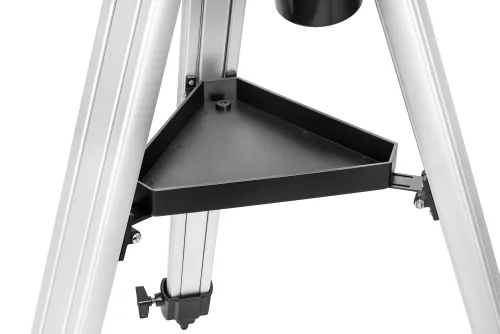
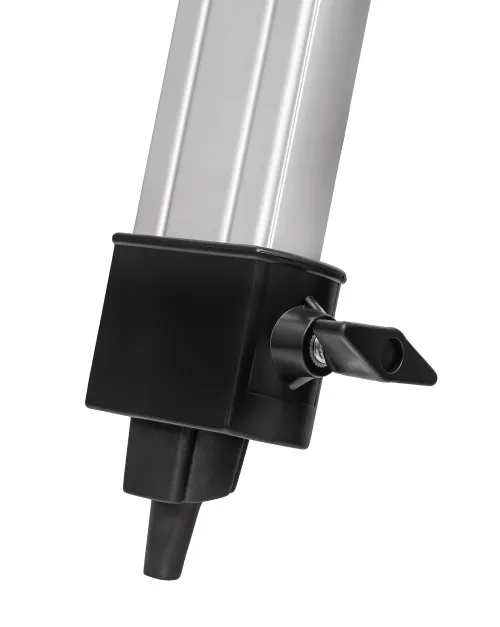
The optical tube sits on an SQ1 equatorial mount with manual control. Its main feature is compensating for the Earth’s daily rotation, allowing you to easily track objects across the sky without worrying about them drifting out of view. A sturdy aluminum tripod with a convenient accessory tray forms the base of the setup.
Full kit
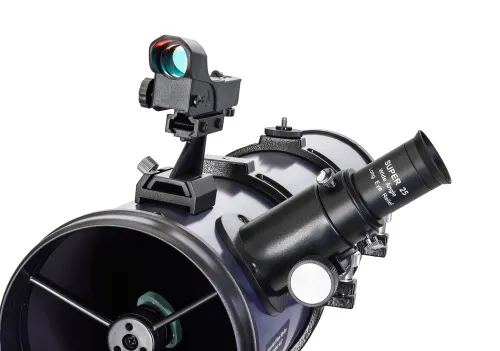
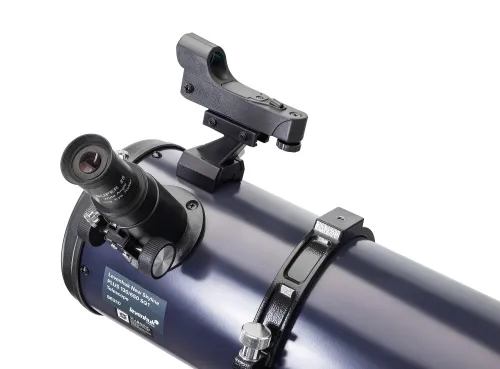
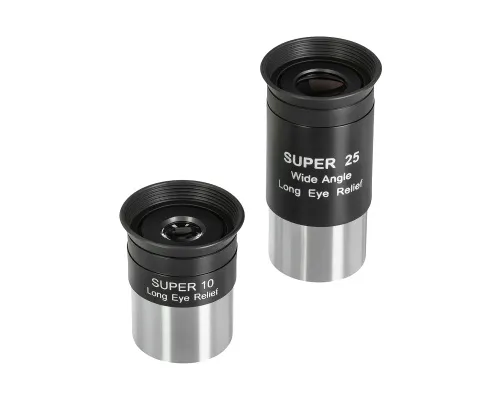
The Levenhuk New Skyline PLUS 130/650 SQ1 makes a great gift for yourself or your loved ones. The kit already includes all of the accessories that you need: two eyepieces (SUPER 10mm and 25mm) and a red dot finder for quick target acquisition. You don’t need to buy any extra small parts. Just unpack the telescope and enjoy the beautiful views!
Key features:
- An aperture of 130 mm and a focal length of 650 mm offer the perfect balance for astronomers ready to look a little deeper into space.
- The parabolic primary mirror completely eliminates spherical aberration, maintaining sharpness across the entire field of view.
- The EQ mount is not only a convenient tool for tracking objects; it also helps you improve your astronomy skills.
- The included eyepieces are enough to see thousands of sparkling stars in globular and open clusters.
- Study the Moon in detail: craters, mountains, seas, rilles, and shadows along the terminator will all be right in front of you.
The kit includes:
- Telescope optical tube
- Equatorial mount SQ1
- SUPER eyepiece 10mm, 1.25"
- SUPER eyepiece 25mm, 1.25"
- Red dot finder
- Slow-motion controls
- Counterweight
- Counterweight bar
- Tube rings
- Aluminum tripod
- Accessory tray
- User manual and warranty card
| Product ID | 86210 |
| Brand | Levenhuk, Inc., USA |
| Warranty | 50 years |
| EAN | 5905555027036 |
| Package size (LxWxH) | 94x44x24 cm |
| Shipping Weight | 10.05 kg |
| Optical design | reflector |
| Optical scheme | Newtonian |
| Primary mirror diameter (aperture), mm | 130 |
| Lens (mirror) shape | parabolic |
| Focal length, mm | 650 |
| Highest practical power, x | 260 |
| Aperture ratio | f/5 |
| Resolution threshold, arcseconds | 0.89 |
| Limiting stellar magnitude | 12.4 |
| Eyepieces | SUPER 10mm (65x), SUPER 25mm (26x) |
| Eyepiece barrel diameter, in | 1.25 |
| Barlow lens | no |
| Finderscope | Red Dot |
| Focuser | 1.25", rack & pinion |
| Tripod | aluminum |
| Tripod height (adjustable), mm | 685–1285 |
| Accessory tray | ✓ |
| Telescope control | manual |
| Mount | equatorial |
| Slow-motion controls | 2 slow-motion control knobs |
| Counterweights | yes |
| Additional | thread for attaching a T-ring |
| Optical tube mounting mode | attachment rings (included) |
| User level | experienced users |
| Assembly and installation difficulty level | easy |
| Observed object | deep-sky objects |
Convenient diagrams that describe how to install additional accessories on refractors and catadioptric telescopes
Find out how to assemble a telescope on an example of the Levenhuk Skyline 90x900 EQ telescope
This short guide will help you avoid typical mistakes and learn more about telescope and mounting types
The basics of astronomical observations for beginners
In this article we have gathered answers to some of the most frequently asked questions about telescopes
The most interesting celestial objects you can observe with Levenhuk telescopes
How telescopes work?
You can actually perform observations from your balcony!
All about telescope sizes, types, magnification, and mounts
Learn how to set up and use the telescope properly
Astronomy in light-polluted skies. Find out what you can observe in the city
Read an interesting comprehensive article on telescopes for little astronomers
The pictures are made with Levenhuk telescopes
Celestial objects you can observe with telescopes of different apertures
Colored and vivid images of galaxies, planets and star clusters entrance everyone who is fascinated by boundless space
Find an interesting review on the history of the changes to a refracting telescope
To make the process of choosing a telescope easier, we will tell you about the characteristics of the most popular types of telescopes today
Learn everything you need to know about refractor telescopes to make the right choice