
 BG
BG  BY
BY  CY
CY  CZ
CZ  DE
DE  EE
EE  ES
ES  GR
GR  HU
HU  IS
IS  IT
IT  LT
LT  LV
LV  MY
MY  PL
PL  PT
PT  RO
RO  SK
SK  TR
TR  UA
UA  USA
USA Bresser NANO AR-80/640 AZ Telescope
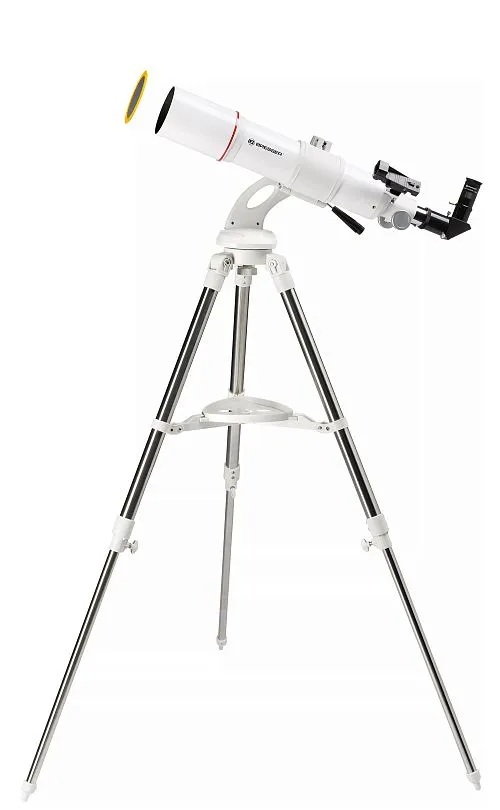
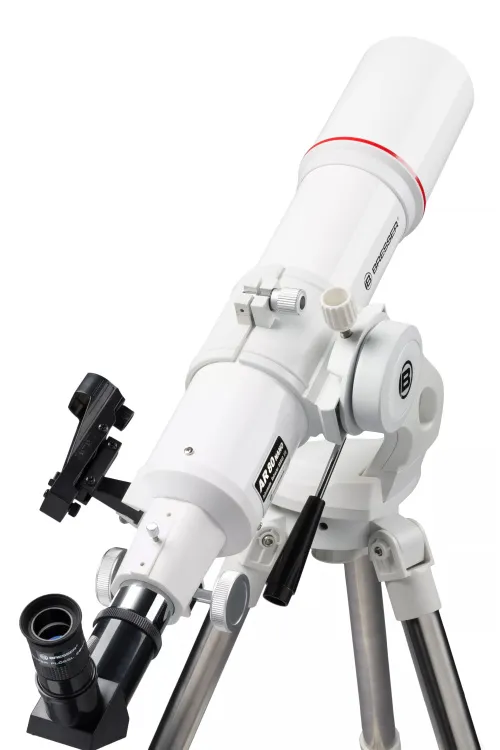
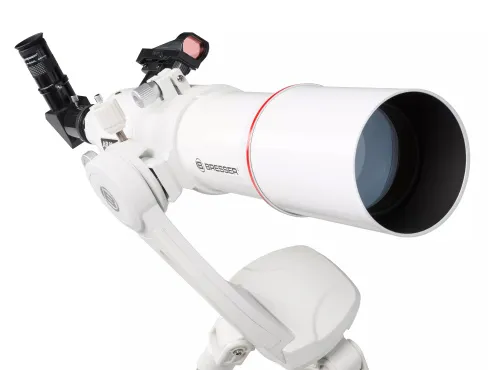
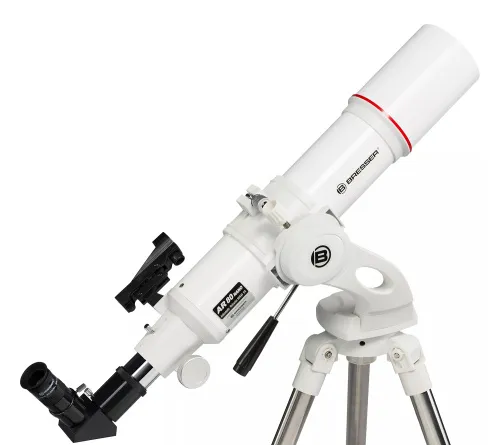
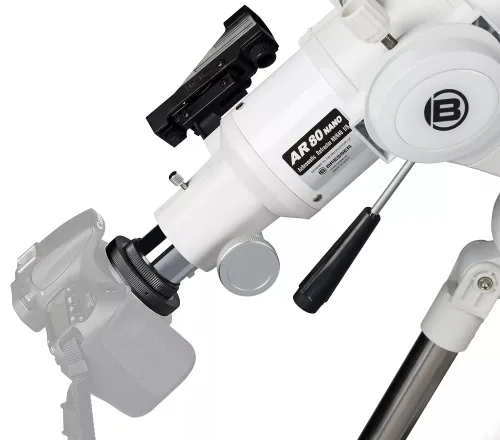
Achromatic refractor. Objective lens diameter: 80mm. Focal length: 640mm
| Product ID | 74254 |
| Brand | Bresser GmbH, Germany |
| Warranty | 2 years |
| EAN | 4007922050867 |
| Package size (LxWxH) | 77x35x21 cm |
| Shipping Weight | 7.6 kg |
New – now including a high-quality aperture solar-filter for safe observation of sunspots, eclipses and planet transits. Great telescope for night and solar observation.
When looking at the technical data, 80mm aperture may not look too impressive. During the observation the impact of the 31% more light gathering power in respect to a 70mm refractor are easily visible: details are seen more clearly in the Bresser NANO AR-80/640 NANO and from a distance of 600 million km the main cloud bands on the planet Jupiter and many Messier objects gets visible. Richfield telescope with high quality achromatic glass lens and a short focal length of 640mm. Suitable also for traveling and to observe large open star clusterns and the milky way. The telescope arrives with a wide array of accessories and almost pre-assembled – observation can start immediately. The Bresser NANO is a light-to-medium-duty alt-azimuth mount with tripod designed to quickly and easily accept small to medium sized refractors, such as the AR-90s, AR-102s, AR-102xs and the ED-80 APO. Lightweight, fast Newtonians will also match up nicely with the Bresser NANO AZ mount. As long as your telescope does not exceed 8 pounds and has a Vixen-Style Universal Dovetail bar for mounting the telescope to the mount head, you are good to go. The stainless steel tripod that comes standard with the Bresser NANO AZ mount has adjustable legs and a wide foot print, which makes the tripod more stable. Spreader vanes with an acessory tray locks against the inside of the legs to secure the tripod even further, and keep vibrations to a minimum.
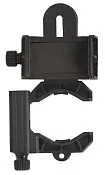
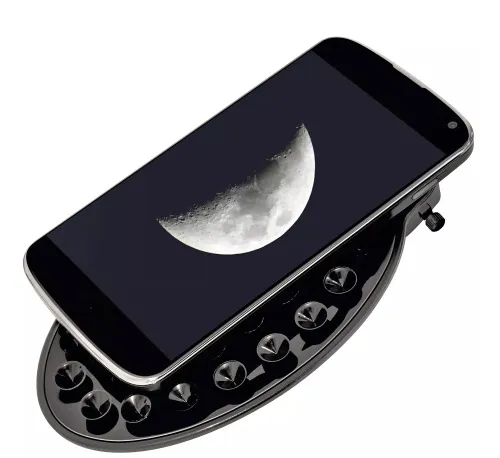
Do you want to capture what you see? With the included smartphone holder bracket you can use your smartphone to easily take colour pictures of celestial objects – like through a telephoto lens ! With the included camera adapter ring T2 you can also attach your DSLR or CCD camera direct to the focuser in order to capture high resolution pictures of the Moon by using short exposure times.
Key features:
- High quality and compact refractor telescope
- Richfield telescope also for traveling
- Easy to use Bresser NANO AZ Mount
- Telescope arrives almost pre-assembled
- MgF2-coated optics
- Magnification with supplied accessories: 25x, (max. suggested: 160x)
- Focal distance, aperture ratio: 640mm, f/8
- Stainless steel field tripod
- Smartphone holder bracket included - for taking pictures
- Eyepiece diameter: 31.7mm (1.25'')
- Telescope for night and solar observation
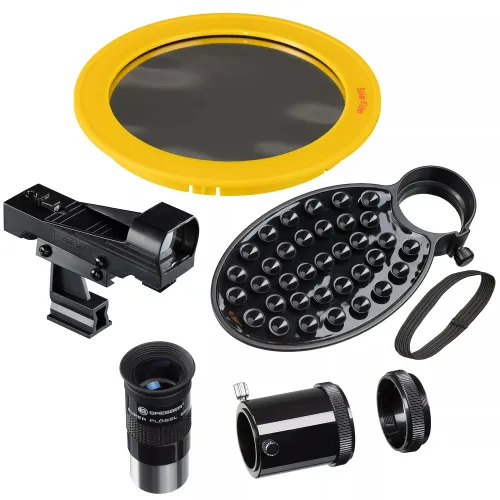
The kit includes:
- Optical tube Messier AR-80/640
- Bresser NANO alt/azimuth mount
- Stainless steel tripod with accessory tray
- Eyepiece: Bresser Super Plössl 26mm
- Red dot finder
- Diagonal mirror 1,25'' (31,7mm)
- Aperture solar-filter
- Smartphone camera adapter
- Camera-Adapter Ring T2 (M42x0.75mm)
- Star chart software & rotatable star-map
| Product ID | 74254 |
| Brand | Bresser GmbH, Germany |
| Warranty | 2 years |
| EAN | 4007922050867 |
| Package size (LxWxH) | 77x35x21 cm |
| Shipping Weight | 7.6 kg |
| Optical design | refractor |
| Optical scheme | achromat |
| Objective lens diameter (aperture), mm | 80 |
| Secondary mirror diameter, mm | 40 |
| Focal length, mm | 500 |
| Highest practical power, x | 160 |
| Aperture ratio | f/8 |
| Resolution threshold, arcseconds | 1.76 |
| Eyepiece barrel diameter, in | 1.25 |
| Finderscope | red dot |
| Tripod | steel |
| Mount | alt-azimuth |
| Optical tube material | metal |
| User level | beginners, experienced users |
| Assembly and installation difficulty level | easy |
| Observed object | deep-sky objects, planets of the Solar System |
and downloads
Convenient diagrams that describe how to install additional accessories on refractors and catadioptric telescopes
Find out how to assemble a telescope on an example of the Levenhuk Skyline 90x900 EQ telescope
This short guide will help you avoid typical mistakes and learn more about telescope and mounting types
The basics of astronomical observations for beginners
In this article we have gathered answers to some of the most frequently asked questions about telescopes
How telescopes work?
You can actually perform observations from your balcony!
All about telescope sizes, types, magnification, and mounts
Learn how to set up and use the telescope properly
Astronomy in light-polluted skies. Find out what you can observe in the city
Read an interesting comprehensive article on telescopes for little astronomers
Celestial objects you can observe with telescopes of different apertures
Colored and vivid images of galaxies, planets and star clusters entrance everyone who is fascinated by boundless space
Find an interesting review on the history of the changes to a refracting telescope
To make the process of choosing a telescope easier, we will tell you about the characteristics of the most popular types of telescopes today
Learn everything you need to know about refractor telescopes to make the right choice