
 BG
BG  BY
BY  CY
CY  CZ
CZ  DE
DE  EE
EE  ES
ES  GR
GR  HU
HU  IS
IS  IT
IT  LT
LT  LV
LV  MY
MY  PL
PL  PT
PT  RO
RO  SK
SK  TR
TR  UA
UA  USA
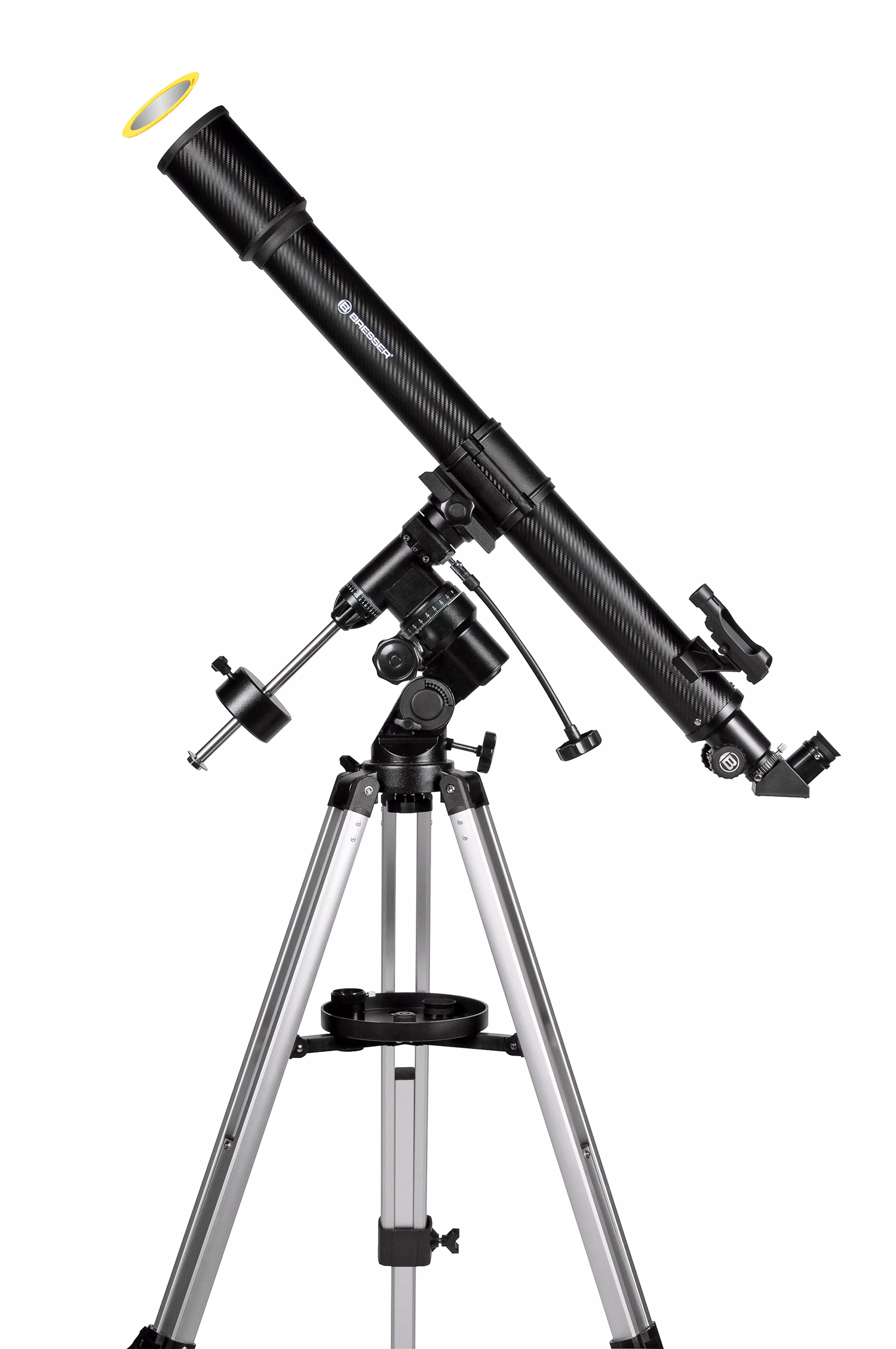
USA Bresser Lyra 70/900 EQ3 Telescope with solar filter
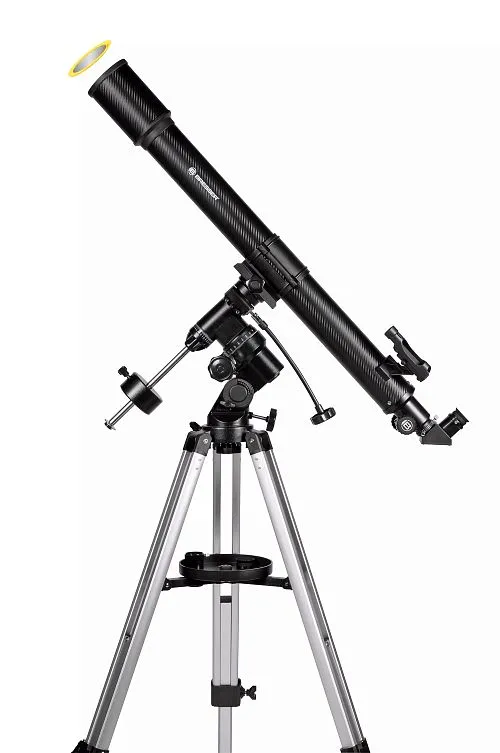
Objective lens diameter: 70mm. Focal length: 900mm
| Product ID | 75666 |
| Brand | Bresser GmbH, Germany |
| Warranty | 2 years |
| EAN | 4007922144856 |
| Package size (LxWxH) | 113x28x18 cm |
| Shipping Weight | 9 kg |
Unpack, set up, enjoy – with this complete telescope set you will soon begin your first exploration of the night sky. All the equipment for your new, exciting hobby is already included: the lens telescope with 70 mm aperture and 900 mm focal length, the equatorial mount, the tripod and a wide range of accessories for astronomical observations. Ideal for beginners: the system is very easy to handle and can even be used by children.
Well-proven design for an easy beginning – the telescope
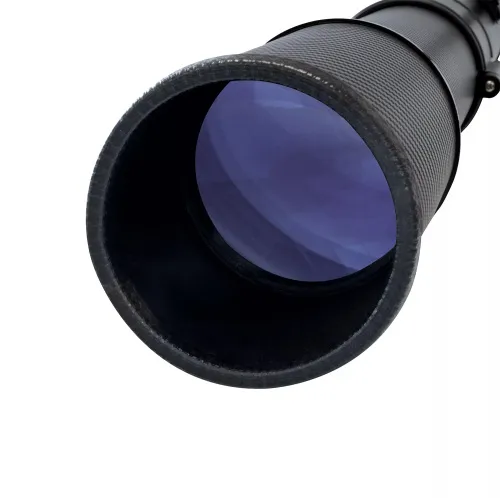
With this set you'll start your voyage of discovery to the stars with a classic refracting telescope, a so-called achromatic refractor of the Fraunhofer type. The advantage of this particular design: even beginners as well as children can use it with ease. In addition, the Lyra refracting telescope impresses with good imaging properties due to its modern, precisely coated optics.
If you compare this entry-level telescope to a corresponding astronomical telescope with a 60 mm aperture, you will notice: with its 70 mm aperture, the Lyra already collects 36 % more light. It also offers better resolution. In addition, 70 mm aperture and 900 mm focal length result in a very large focal ratio (ratio of aperture to focal length) of about 1 to 12.9 (F/12.9). The impressive result: a very sharp image with good contrast. Enjoy the view of our natural satellite, the Moon. Or take a look at the planets. Even the famous Pleiades sparkle captivatingly in your field of view. For the long focal length makes the telescope a specialist for observing the Moon, Sun, planets and open as well as globular clusters.
And how big will these eye-catchers of the sky appear? Thanks to the 70 mm aperture, the resolution allows magnifications of up to 140x with really sharp images. Technically, much more would be possible – theoretically up to 675x using the included accessories. However, then the image sharpness could slowly decrease with increasing magnification. Of course – as with everything in astronomy – the prevailing conditions also play a role: So, how much you can actually magnify is determined not only by your telescope's performance but also by the air turbulence in the atmosphere (seeing conditions).
Perfect foundation for your glimpse into space – mount and tripod
Once you have found the ideal location for your astronomical telescope, you can quickly start exploring the sky. Simply mount the tube with the equatorial mount on the height-adjustable aluminium tripod. This special type of mount has the advantage of particularly convenient tracking: for this purpose, an axis is aligned parallel to the Earth's axis by pointing it approximately at Polaris during the so-called "alignment". Afterwards, the movement of the celestial bodies can be conveniently compensated for on this one axis rather than on both at the same time, as is the case with an azimuthal mount. In addition, the two flexible shafts with fine adjustment ensure the very precise and comfortable adjustment and tracking of the entry-level telescope. Always the right accessories at hand: the storage plate between the tripod legs provides space for eyepieces, barlow lens, solar filter etc.
Keep track of things automatically: for this telescope’s equatorial EQ-3 mount, the tracking motor is available as an optional accessory. This eliminates the need to manually track a celestial object set in the telescope. When this motor is installed at the mount, it automatically tracks the celestial object, keeping it in the field of view of the eyepiece. This makes observing the night sky even more comfortable!
All-round equipment for astronomy newbies – the accessories
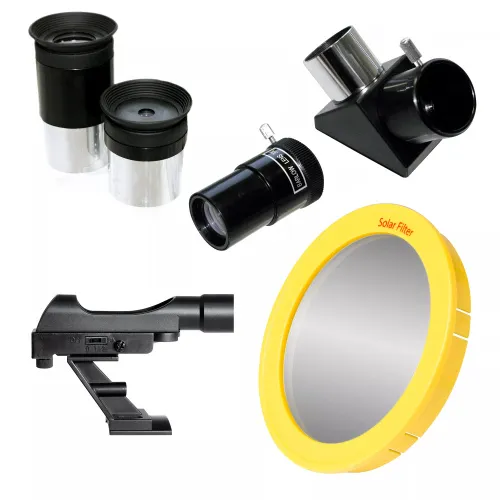
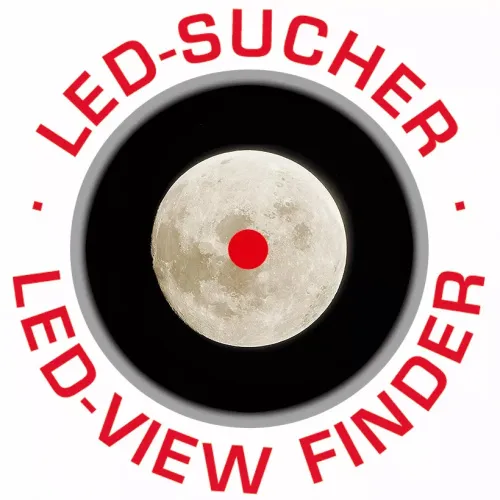
Moon, planets or the Sun – with the extensive accessories you will get the best out of your astronomical telescope for any observation object. But initially, the LED viewfinder helps you find the nocturnal celestial bodies in the first place. To do this, the direction finder is installed and aligned parallel to the actual telescope. When you then look through it, a small red dot appears to hover in front of the sky. It shows you the spot at which the telescope is pointed. In this way, you precisely align the tube and easily find your objects before you gaze at them through the higher magnification of the telescope.
Change of perspective for stargazers: using the two eyepieces you achieve different magnifications. They can be switched easily: with their standard socket diameter of 1.25 inches (31.7 mm), they are simply inserted into the eyepiece focuser of the entry-level telescope. Looking for even more detail? Then grab the 3x barlow lens and triple the magnification of the eyepieces.
Comfortable observation at all times: a 90-degree star diagonal mirror is included. So, even if the telescope points vertically upwards into the sky, you can still look in comfortably from the side.
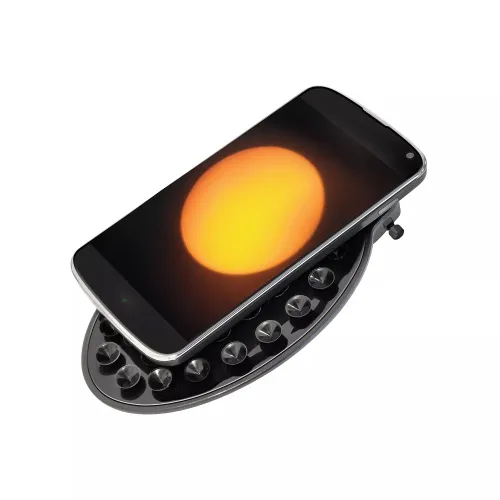
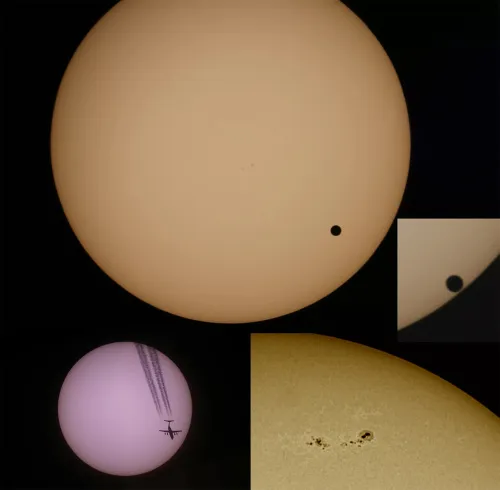
For exciting discoveries during the day simply attach the safe solar filter to the telescope’s aperture. This way you can take a closer look at our own star and marvel at sunspots and granulation on the sun.
CAUTION: Never point the telescope at the sun without the solar filter!
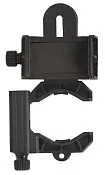
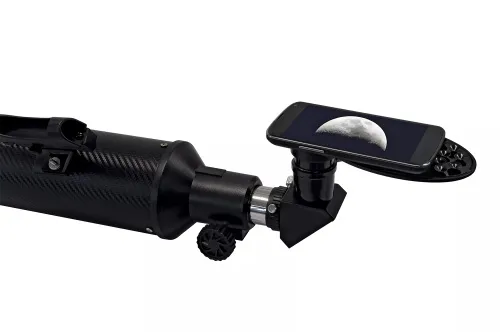
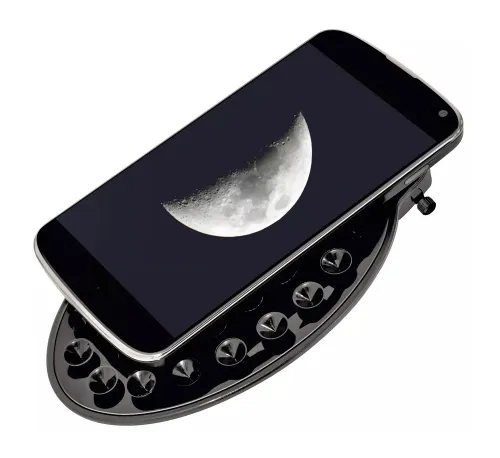
Take the plunge into the fascinating world of astrophotography with the smartphone adapter. It allows you to use your smartphone as a camera on the telescope – and easily take exciting snapshots of your favourite celestial bodies such as the Moon or the Sun.
Key features:
- Beginner’s lens telescope with 70 mm aperture and 900 mm focal length
- Achromatic refractor type Fraunhofer
- Well suited for observing the Sun, Moon, planets and star clusters
- Height-adjustable tripod with equatorial EQ3 mount
- Sensitive adjustment through flexible shafts and fine adjustment in both axes
- Easy to use, very suitable for beginners and children
- Focal ratio F/12.9, thus very sharp image and high contrast
- 1.25 inch (31.7 mm) eyepiece focuser
- Two eyepieces and one barlow lens with 1.25 inch (31.7 mm) extension tubes for different magnifications
- Safe solar observation with the included solar filter
- First steps in astrophotography with smartphone camera adapter
The kit includes:
- Telescope
- Aluminium tripod
- Equatorial EQ3 mount
- Eyepieces: 4mm and20 mm (1.25 inch sockets)
- Barlow lens, 3x (1.25 inch socket)
- Star diagonal mirror
- LED illuminated dot finder
- Solar filter
- Smartphone camera adapter
- Accessory tray
- Astronomy software download
- Instruction manual
| Product ID | 75666 |
| Brand | Bresser GmbH, Germany |
| Warranty | 2 years |
| EAN | 4007922144856 |
| Package size (LxWxH) | 113x28x18 cm |
| Shipping Weight | 9 kg |
| Optical design | refractor |
| Optical scheme | achromat |
| Objective lens diameter (aperture), mm | 70 |
| Focal length, mm | 900 |
| Magnification, x | 45 — 140 |
| Aperture ratio | f/12.9 |
| Eyepieces | 4mm, 20mm |
| Eyepiece barrel diameter, in | 1.25 |
| Barlow lens | 3x |
| Finderscope | red dot |
| Solar filter included | ✓ |
| Tripod | aluminum |
| Telescope control | manual |
| Mount | equatorial |
| Counterweight weight, kg | 1.1 |
| User level | beginners |
| Observed object | planets of the Solar System and deep-sky objects |
and downloads
Convenient diagrams that describe how to install additional accessories on refractors and catadioptric telescopes
Find out how to assemble a telescope on an example of the Levenhuk Skyline 90x900 EQ telescope
This short guide will help you avoid typical mistakes and learn more about telescope and mounting types
The basics of astronomical observations for beginners
In this article we have gathered answers to some of the most frequently asked questions about telescopes
How telescopes work?
You can actually perform observations from your balcony!
All about telescope sizes, types, magnification, and mounts
Learn how to set up and use the telescope properly
Astronomy in light-polluted skies. Find out what you can observe in the city
Read an interesting comprehensive article on telescopes for little astronomers
Celestial objects you can observe with telescopes of different apertures
Colored and vivid images of galaxies, planets and star clusters entrance everyone who is fascinated by boundless space
Find an interesting review on the history of the changes to a refracting telescope
To make the process of choosing a telescope easier, we will tell you about the characteristics of the most popular types of telescopes today
Learn everything you need to know about refractor telescopes to make the right choice